Fluent Spanish More Important than Accent
Speaking Fluent Spanish is More Important than Perfecting an Accent
Speak fluent Spanish with time and effort. There are no shortcuts. Don’t strive to be perfect, strive to be easily understood and be able to communicate in any Spanish speaking country — for which there are 21 if you include the US territory Puerto Rico.

Accents Are Fine — Even Cute
Fluent Spanish > Perfect Accent
The majority of natives from most countries find accents from foreigners visiting or living in their country to be cool, cute, or even downright sexy, so don’t worry about your accent — focus on being able to speak fluent Spanish regardless of your accent. Think of Sofía Vergara, the trophy wife, Gloria Delgado-Pritchett on Modern Family. I loved her character. I think she “faked” having a strong accent a little for comedic effect, however, she still speaks English fluently regardless of her accent. Sure, she may make a mistake here and there as we all will on our language learning journey. However, she’s undoubtedly fluent in English, and that my friends is the goal.
¿Cómo andas?, ¿Qué cuentas?, ¿Qué hay de nuevo?, ¿Qué tal? Are Pretty Much Universal
Some phrases to use instead of ¿Cómo está usted? are somewhat universal and can be used in other countries such as: ¿Cómo andas?, ¿Cómo vas?, ¿Qué cuentas?, ¿Qué hay de nuevo?, and ¿Qué tal?. You’ll undoubtedly hear these phrases over and over when you learn Spanish watching Netflix. Other words or phrases are particularly unique to that country.
Phrases Generally Unique to a Certain Country or Region
The following is by no means an exhaustive list of informal greetings in Spanish as I’m only including Colombia, Mexico, Spain and Venezuela, but it’ll certainly give you a jump on learning some informal “Whassup/how ya doin’?” phrases beyond the formal and overly taught ¿Cómo está usted? Don’t get me wrong there is obviously a place for ¿Cómo está usted? but in everyday life it’s hardly used unless you’re formally meeting someone for like for a job interview or potential business partner etc. You’ll soon see what I mean if you decide to learn Spanish watching Netflix.
Colombia Greetings
- ¿Qué más?
- ¿Cómo vas, llave?
- ¿Quibo, parce/parcero?
- ¿Quibo marica? (“gay” but used with friends)
- ¿Quibo güevón? (“idiot” but used with friends)
Mexico Greetings
- ¿Qué rollo?
- ¿Qué show?
- ¿Qué tranza?
- ¿Qué onda, wey/güey/carnal?
- ¿Qué pedo? (“fart” but used with friends)
Spanish Greetings
- ¿Qué pasa, tío/tía?
- ¿Qué pasa, tronco?
- ¿Cómo va la movida?
- ¿Cómo estás, colega?
- ¿Qué tal, chaval/chavala?
Venezuela Greetings
- ¿Qué peo?
- ¿Qué bola?
- ¿Cómo estás, pana?
- ¿Cómo está la vaina?
- ¿Todo bien, bro/brother?
Don’t Stress About a Particular Accent
21 Spanish Speaking Countries (Including Puerto Rico)
The goal isn’t to have a perfect accent. There are 21 different countries (I’m including Puerto Rico) that speak Spanish as their official language, totaling 442 million people. Each country has their own accent or style of speaking including slang words and phrases. Just as the US, Australia, UK and New Zealand differ from one another so does the Spanish speaking world. So having a perfect Spanish accent doesn’t make sense unless you only plan on only doing business, speaking, or living in one particular country. When you learn Spanish watching Netflix you’ll understand. You’ll see Teresa Mendoza in LRDS question the Spaniards when they refer to money as “pasta” instead of “plata”, “lana”, “varo” or “verdes”. Each region has their own swag if you will.
You Can Do Better than “¿Cómo está usted?”
You can learn to speak fluent Spanish watching Netflix and YouTube. Use as many tools as possible that you have at your disposal. Sorry, but that stuff you learned in high school won’t fly. I mean do you really go up to your friend and say “Hi, how are you? No, you’d probably say, “Hey whassup?” or “Sup man?” or if you’re a girl maybe, “Hey whadup girlfriend?” or whatever your slang is but you get the point.
We Rarely Use “Hi, How Are You?” — Same With Native Spanish Speakers
Sure, if you’re meeting someone for the first time you don’t want to go all urban on them but still no need for “Hi, how are you?” What about “Hey, how ya doin’?”. It’s informal but it’s not urban slang. Same thing goes for Spanish. I don’t think I’ve ever heard “¿Cómo está usted?” in my life in the real world. Maybe I just don’t hang around enough formal people or put myself in formal situations. I don’t know. Check out these three guys regarding Paisa Spanish from Colombia for example. ¿Hola, cómo está usted? just doesn’t cut it! Sorry! Good luck!
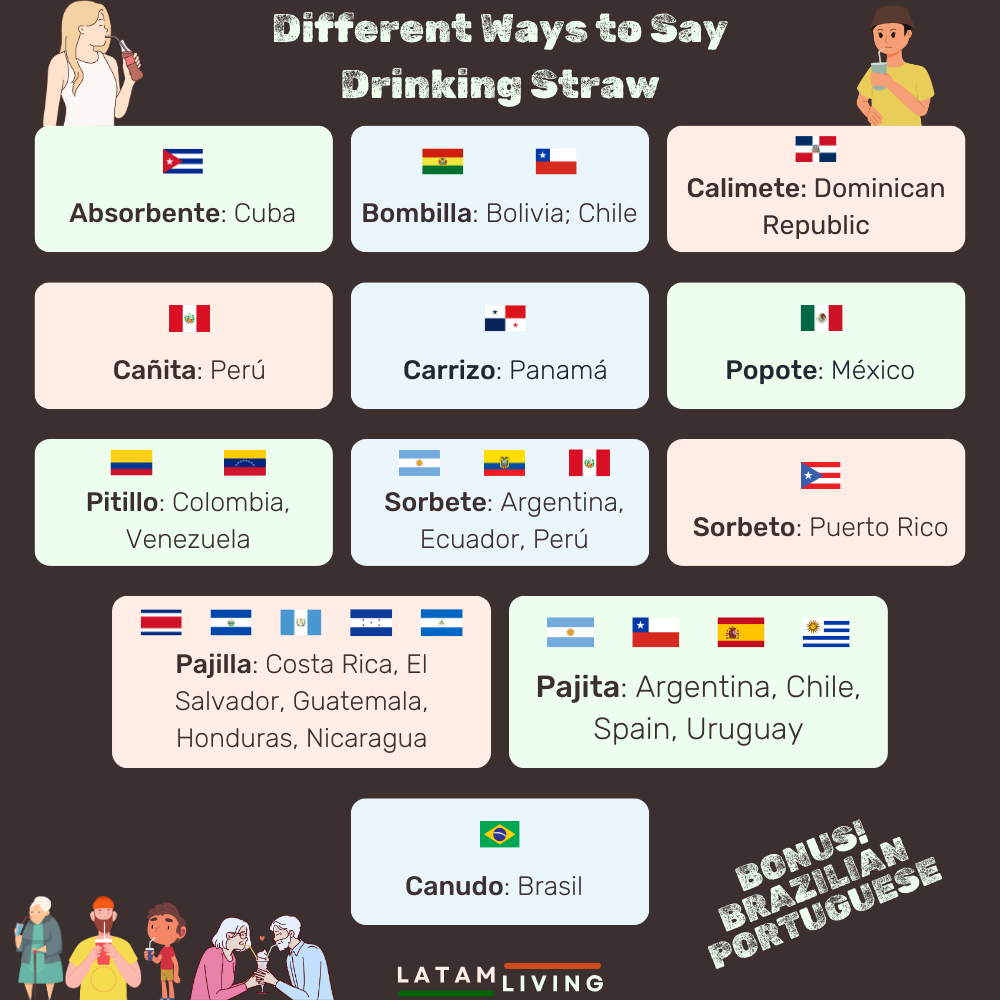
11 Ways to Say Drinking Straw in Different Spanish Speaking Countries
It’s quite interesting how different countries use different words for the same object. I currently reside in Mexico and can confirm without doubt that the word used in Mexico is “popote”. Some countries are listed more than once as they use more than one word.