
Best Cities to Live in Ecuador — 2026
Best Cities to Live in Ecuador for Expats TL;DR
I go over the best cities to live in Ecuador for expats ensuring there’s something for everyone. First, we’ll jump into a brief history of Ecuador, as we feel it’s important for wanna be expats to know a bit about the country they’re considering calling home. It’s not too long, promise. I also touch on the reality of the current security crisis facing Ecuador which can’t be ignored. We’ll then delve into cities and towns throughout Ecuador that are bound to fit certain expats wants and needs. Be sure to check our Best Cities to Live in Colombia and Best Cities to live in Mexico pages.

Ecuador
Considering a move to Ecuador? You’re not alone. Ecuador is divided into 24 administrative divisions called “provincias,” unlike Colombia’s “departamentos” or Mexico’s “estados.” This relatively small but highly biodiverse country in northwest South America borders Colombia to the north and Peru to the south and east, with the Pacific Ocean to the west. Its varied geography includes the Andes Mountains, Amazon Rainforest, coastal plains, and the Galápagos Islands, known worldwide for their wildlife. Ecuador’s population is estimated at 18.1 million as of mid-2025.
Brief History of Ecuador
Pre-Columbian Civilizations
Ecuador’s history begins with a mosaic of indigenous cultures. Long before European contact, groups such as the Cañari, Quitu, and Caranqui inhabited the region. These communities developed unique customs, languages, and systems of governance, and maintained active trade and agriculture across the highlands, coast, and Amazon basin.
Inca Expansion and Resistance
In the late 15th century, the Inca Empire expanded northward from Peru, incorporating much of present-day Ecuador into its territory. Despite their dominance, the Incas faced ongoing resistance from local groups. Their rule lasted only a few decades before the arrival of Spanish forces.
Spanish Conquest and Colonization
On December 6, 1534, Spanish conquistador Sebastián de Benalcázar founded San Francisco de Quito, naming it in honor of Francisco Pizarro. Spanish colonization brought widespread changes, including the dismantling of indigenous institutions, the imposition of Catholicism, and the integration of Ecuador into the Spanish Empire.
Simón Bolívar and Antonio José de Sucre Lead Rebellion
Battle of Pichincha
On May 24, 1822, patriot forces under General Antonio José de Sucre, a close ally of Simón Bolívar, defeated Spanish royalists on the slopes of the Pichincha volcano near Quito. The victory secured the independence of Quito and was a key moment in liberating the territory now known as Ecuador. Bolívar entered the city shortly after and was received with great acclaim.
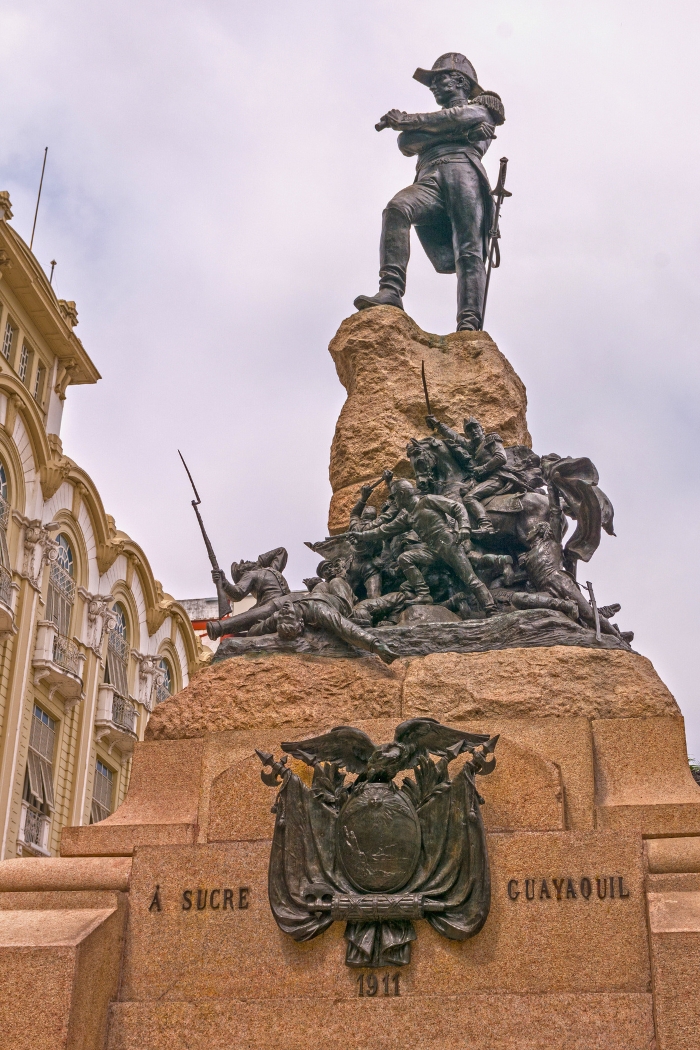
Ecuador Joins La Gran Colombia
Five days later, on May 29, 1822, the territory joined La Gran Colombia, Bolívar’s vision of a unified northern South America. Ecuador became the “Southern District” within this larger republic, which also included Colombia, Venezuela, and later Panama. Bolívar had visited Quito earlier and played a significant symbolic and strategic role in the region’s liberation.
La Gran Colombia Included Present-Day Ecuador, Colombia, Venezuela, and Panama
Following the defeat of Spanish forces across northern South America, the territories of modern-day Ecuador, Colombia (then including Panama), and Venezuela were unified into a single republic known as La Gran Colombia. While much of Ecuador had only recently been liberated, the region was incorporated as the “Southern District.” Simón Bolívar remained active in the southern campaigns, continuing efforts to free Peru, while administrative leadership was centered in Bogotá under Francisco de Paula Santander.
Large Territory and Politics Lead to Breakup
La Gran Colombia lasted only 11 years. The republic struggled to maintain cohesion due to its vast geography, limited infrastructure, and political divisions. Many local elites disagreed with the centralization of power in Bogotá and resisted elements of the 1821 Constitution. In late 1829, delegates in Venezuela convened to debate the future of the republic. The resulting decision to break away, despite Bolívar’s objections, signaled the beginning of the union’s collapse.
Ecuador Declares Independence from the Union
Inspired by Venezuela’s exit, Quito followed suit. On May 13, 1830, prominent figures gathered in the city to formally announce their intention to leave La Gran Colombia. The Southern District declared its independence and established the sovereign Republic of Ecuador, appointing Juan José Flores as its first president.
Panama Separates 73 Years Later with US Support
Although Ecuador and Venezuela left La Gran Colombia by 1830, Panama remained for another 73 years. In 1903, after Colombia rejected a US proposal to build a canal, Panamanian separatists led by José Agustín Arango gained military backing from the United States. With US support, Panama declared its independence on November 3, 1903, shortly after the Thousand Days War.
Ecuadorian Economy
Ecuador’s Shift from Sucre to US Dollar
In the late 1990s, Ecuador faced a major economic crisis. In 1999, the economy fell by 7.5 percent, and inflation surged past 60 percent, the worst in Latin America. The national currency, the sucre, lost two-thirds of its value. On January 9, 2000, President Jamil Mahuad and Vice President Gustavo Noboa decided to adopt the US dollar as Ecuador’s currency to stabilize the situation. The move was unpopular, especially with indigenous groups led by CONAIE, who, backed by the military, occupied Congress in protest. The unrest forced Mahuad to resign, and Noboa took over as president, guiding the switch to dollarization. This controversial change marked a turning point in Ecuador’s economic history.
Ecuador’s Export Economy and Agricultural Strength
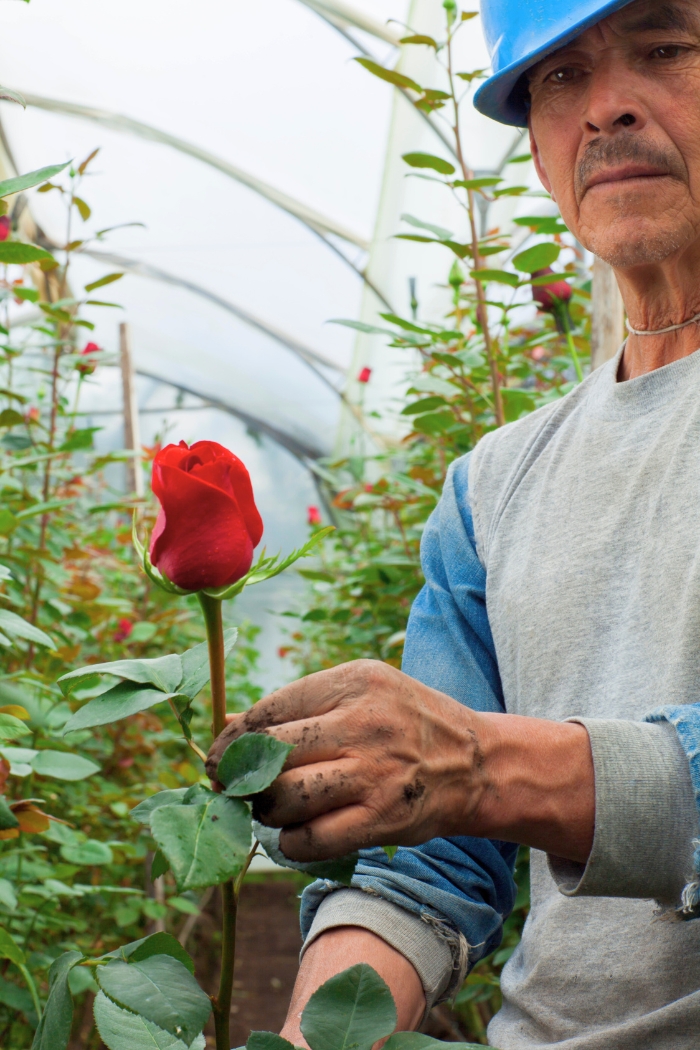
Ecuador’s economy has grown steadily since adopting the US dollar in January 2000. Formerly one of OPEC’s top oil exporters, the country withdrew from the organization on January 1, 2020, as part of a plan to reduce public spending and diversify revenue. Ecuador’s equatorial location provides a stable year-round climate, supporting a strong agricultural sector. It’s the world’s leading exporter of bananas, a major exporter of cocoa, the second-largest exporter of shrimp (behind India), and the second-largest exporter of roses (behind the Netherlands).
Illicit Drug Transit and Escalating Violence
Ecuador is not a major producer of illicit drugs like Colombia or Peru but has become a key transit country for cocaine shipments due to its location between the two and its access to Pacific shipping routes. This role has made it a hotspot for international drug trafficking and money laundering. In recent years, Ecuador has experienced a sharp increase in violence tied to organized crime. Guayaquil is more dangerous than Mexico City, Guadalajara, Bogotá or Medellín. The homicide rate jumped from 13.7 per 100,000 people in 2021 to 45 in 2023, making Ecuador one of the most violent countries in the world. In 2024, the country recorded 6,986 homicides — its second most violent year on record (2023 was the deadliest). The government has responded with states of emergency and military deployments in an effort to restore order.
Tourism Decline Amid Security Concerns
Ecuador has long been known for its geographic diversity and history, drawing visitors to the Galápagos Islands, Quito, Cuenca, Baños, and coastal towns like Salinas and Montañita. However, rising violence has hurt the tourism sector. International arrivals dropped by 12.6% in 2024 compared to the previous year. Despite the increase in violence, Ecuador still draws visitors. There’s hope that improving security conditions will help revive confidence in the country’s tourism industry.
Ecuador’s Ethnic Diversity and Biodiversity
Ecuador is ethnically diverse, with mestizo, white, indigenous, and black communities as the main groups. Mestizos make up the majority and are found throughout the entire country. White and indigenous populations are mostly concentrated in the Andean highlands, while black communities primarily live in coastal regions. For such a small country, Ecuador is among the world’s most biodiverse. Its landscapes range from the Amazon rainforest and Andes mountains to the Pacific coast and the Galapagos Islands.
Ethnic Diversity
Numbers are based on the 2023 Latinobarómetro survey, which offers insights into how Ecuadorian self-identify by ethnicity. You can download the survey on their site.
- Mestizo: 77.5.%
- White: 6.6%
- Indigenous: 6.2%
- Black: 4.3%
- Mulatto: 3.0%
- Other race: 1.1%
- Don’t know: 1.0%
- Didn’t answer
- Asian: 0.1%
Ecuadorian Food
Traditional Ecuadorian Cuisine
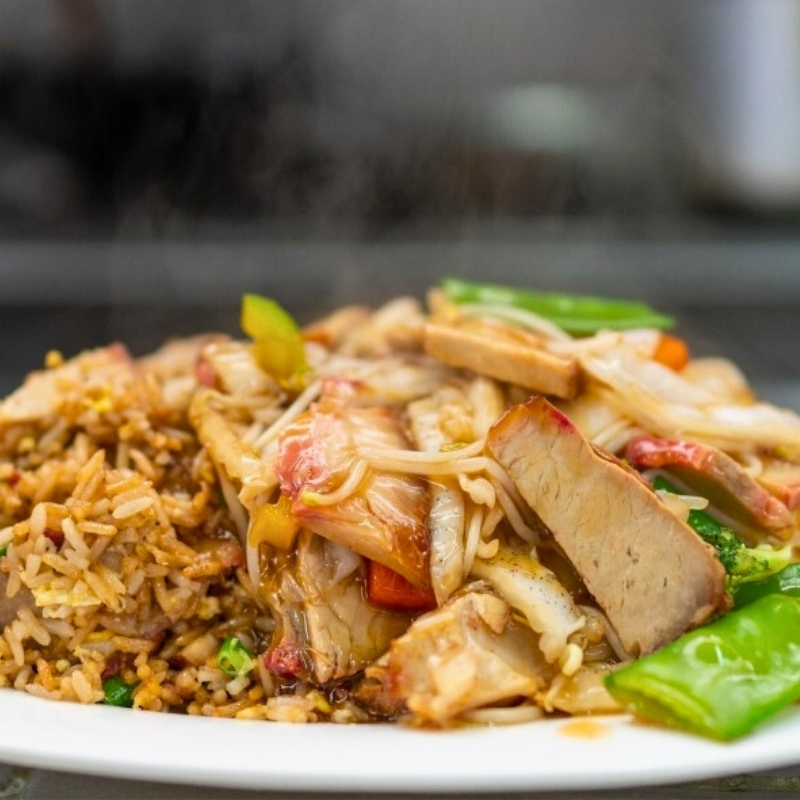
Known as “Creole food,” Ecuador’s cuisine varies by region. Along the coast, seafood is abundant. Shrimp, crab, corvina, and ceviche (raw fish cured in citrus) are everyday staples. In the highlands, you’ll find more grilled meats, potatoes, and soups. Cuy, or roasted guinea pig, is mostly eaten in the highlands, where it can often be seen cooked whole and hanging in market stalls or roadside eateries. Although it’s a regional specialty, many Ecuadorians don’t have the stomach for it. Ecuador has a wide variety of fruits, legumes, meats, seafood, and vegetables that are fresh, high in quality, and relatively affordable. Ecuadorian food isn’t spicy, although you can always add hot sauce! Some dishes are listed below.
- Ceviche: Raw seafood (fish, shrimp, squid) cured in citrus juice served with popcorn or chifles (plantain chips).
- Churrasco: Grilled beef served with rice, fried egg, avocado, fries, and sometimes a small salad.
- Crab: Usually served whole and boiled with garlic, herbs, and beer in coastal restaurants.
- Cuy: Guinea pig, traditionally spit-roasted and eaten whole, mostly in the Andes.
- Guatita: A stew made from beef tripe in a rich peanut sauce, usually served with rice and avocado
- Locro: A thick, hearty potato soup often made with cheese and avocado, common in the highlands.
- Maduros: Ripe plantains that are fried until caramelized and sweet.
- Menestra: A lentil or bean stew served with rice and grilled meat or fried plantains.
- Moro: Rice cooked with lentils or beans, sometimes mixed with bits of meat or spices.
- Mote pillo: Hominy (puffed corn) scrambled with eggs, onion, and achiote, usually eaten for breakfast in the Sierra.
- Patacones: Green plantains that are smashed and fried twice until crispy, often served as a side dish.
- Pumpkin cream: A smooth, savory soup made from pumpkin or squash, commonly served as a starter.
National and International Franchises
Popular Ecuadorian chains include El Español, La Choza, Pollos a la Brasa Barcelona, Super Pollo, and the supermarket chain Tía, which prepares fast food-style meals. US franchises like Burger King, Domino’s, KFC, McDonald’s, Papa John’s, and Subway are found in major cities and shopping centers.
Ecuador — Best Cities for Expats Overview
I’ve categorized different types of expats. Most people, not all, fall into one of the categories below. Trust me, I know not everyone fits in a box. At the beginning of a new city section, I’ll include which type of expat would typically fit best. I won’t list these for smaller towns or quick mentions, only cities popular with expats.
- Older single person
- Rich of any age
- Senior citizens
- Social security retirees
- Young couple
- Young single digital nomad
Ecuador Safety Concerns
Ecuador is going through its most violent times in history. 2023 was the worst year ever for homicide and 2024 wasn’t far behind. That’s not meant to scare you but if you go, it’s extremely important to be aware of your surroundings and take basic safety precautions that I’m sure you’ve read or heard a thousand times. Check out the tabs below concerning safety tips in Ecuador that could apply to anywhere.
I know people want to have fun and for those that drink, I get it. Although I quit drinking, I know what it’s like to be young and want to party. I want people to have fun and “live”. Don’t go to bad areas and don’t get too wasted in some sketchy part of the city. Do your own research in advance of where you’ll be going and let your friends and/or family know where you’ll be at all times. On the other hand, don’t let strangers know your whereabouts.
Also, if you drink make sure to have your drink with you at all times. Don’t go to the bathroom and leave your drink at the bar and come back and drink it. Scopolamine is a drug used in Medellín, and other parts of Colombia to knock people out and rob them of their belongings. I’m guessing Colombia isn’t the only country where this happens. It may happen in Ecuador too.
Ecuador is ethnically diverse. Your skin tone and city choice affect how well you blend in. Blacks are prominent on the Pacific coast. Mestizos, whites and indigenous are found in Guayaquil, the port city, as well as the highlands in cites like Cuenca and Quito. Ecuadorians are used to seeing foreigners. Depending on your skin tone, you may go unnoticed until you speak.
Be careful with your cell phone. Of course, you want to have a good time and get some Instagram worthy pics or videos but just be aware of your surroundings. Be extra cautious at night. Use your gut instinct. We have very powerful instincts. We just need to listen to them.
I don’t recommend bringing any excessive jewelry whatsoever to Ecuador. Even if it’s fake and “worth nothing”, a thief doesn’t know that and may still attack. Leave the bling at home and remember “No dar papaya”, like they say in Colombia.
Personally, I’d stay away from wearing Crocs or Tevas — otherwise just wear comfortable shoes while in Ecuador.
If you want to do a tour in Ecuador, do it during the day with a reputable tour company. Check on Trip Advisor.
Quito, Pichincha
Quito, Ideal for:
- Older single person
- Rich of any age
- Senior citizens
- Social security retirees
- Young couple
- Young single digital nomad
Quito — Second Highest World Capital
Quito is Ecuador’s capital and second-largest city, with a population of around 2.8 million in 2025. Set high in the Andes at an elevation of 2,850 meters (9,350 feet), it ranks as the second-highest capital city in the world after La Paz, Bolivia. Quito’s historic center was the first city ever declared a UNESCO World Heritage Site, alongside Kraków, Poland, in 1978. Despite its altitude, the city maintains a modest skyline due to strict zoning laws related to earthquake risk.
Quito Climate
Despite being located on the equator, Quito’s high elevation keeps temperatures mild year-round—Köppen Cfb. Days are usually spring-like, with highs around 19 °C (66 °F), while nights can dip to 10 °C (50 °F) or lower. Mornings are often sunny, but clouds and afternoon rain showers are common, especially during the rainy seasons from March to May and October to November. The dry season typically runs from June to September. The sun is extremely strong due to the altitude and equatorial UV intensity, so sunscreen is essential even when it feels cool.
Quito Drops to “Gamma” According to GaWC
Quito was categorized as Gamma in Globalization and World Cities Research Network “GaWC” 2024 findings. Their previous report in 2022, listed Quito as Beta- so it slipped 2 spots, perhaps due to the unprecedented narco violence in Ecuador. It was accompanied by the following cities: Ahmedabad, Birmingham (UK), Bologna, Bristol, Detroit, Haikou, Harbin, Islamabad, Kampala, Monterrey, Muscat, Nashville, Ningbo, Osaka, Phnom Penh, Pune, Riga, San Jose (CA), San José (Costa Rica), San Salvador, Tampa, Tegucigalpa, Tbilisi, Tirana. Only 8 cities were recognized as Alpha + while just 2 were listed as Alpha ++, London, England and New York City, United States. GaWC cited them as “clearly more integrated than all other cities and constitute their own high level of integration.”
Globalization and World Cities Research Network “GaWC”
GaWC categorizes the importance of world cities into the following global scales with economics weighed more heavily than political or cultural factors:
Alpha++ Cities
According to GaWC’s interpretation, “In all analyses, London and New York stand out as clearly more integrated than all other cities and constitute their own high level of integration.”
Alpha+ Cities
According to GaWC’s interpretation, “Other highly integrated cities that complement London and New York, largely filling in advanced service needs for Pacific Asia.”
Alpha & Alpha- Cities
According to GaWC’s interpretation, “Very important world cities that link major economic regions and states into the world economy.”
- Alpha++
- Alpha+
- Alpha
- Alpha-
Beta Level Cities
According to GaWC’s interpretation, “These are important world cities that are instrumental in linking their region or state into the world economy.”
- Beta+
- Beta
- Beta-
Gamma Level Cities
According to GaWC’s interpretation, “These can be world cities linking smaller regions or states into the world economy, or important world cities whose major global capacity is not in advanced producer services.”
- Gamma+
- Gamma
- Gamma-
Cities with Sufficiency of Services
According to GaWC’s interpretation, “These are cities that are not world cities as defined here but they have sufficient services so as not to be overtly dependent on world cities. Two specialized categories of city are common at this level of integration: smaller capital cities, and traditional centres of manufacturing regions.”
- High Sufficiency
- Sufficiency
Quito Crime
It’s Getting Worse
Ecuador experienced its most violent year in 2023, with a national homicide rate of approximately 45 per 100,000 people, driven by drug-related violence and gang activity. While Quito had historically been less affected, the capital has seen a concerning rise in crime. In 2024, neighborhoods like Calderón, Quitumbe and Solanda, reported increased gang presence, with violent incidents including shootings and assassinations. By May 2025, Quito recorded 94 homicides, a 32.4% increase compared to the same period in 2024.
Quito State of Emergency
In response, President Daniel Noboa’s administration declared a state of emergency in Quito and six other provinces in October 2024, allowing for increased police and military presence and strategic operations against criminal groups. Additionally, the Organization of American States launched a project in 2024 to strengthen Ecuador’s judicial and investigative systems, aiming to enhance the efficiency of crime response and prosecution. Despite these efforts, challenges remain. The high turnover of police leadership has hindered long-term planning. Nonetheless, initiatives are underway to address the escalating violence and restore safety in Quito.
Quito Traffic
Quito’s traffic is congested, especially during rush hour. The city’s winding streets, steep topography, and high number of vehicles lead to gridlock. Air pollution is a concern, particularly in densely populated areas and on busy streets like Avenida Mariscal Sucre and Avenida 6 de Diciembre.
Pico y Placa
To reduce congestion and pollution, Quito enforces a program called Pico y Placa (Spanish) which is essentially the same idea as Bogotá’s Pico y Placa and Mexico City’s Hoy No Circula, as it restricts vehicle use based on license plate numbers. The rules apply Monday through Friday from 6 AM to 9:30 AM and 4 PM to 9 PM. For example, vehicles with plates ending in 1 and 2 cannot drive on Mondays. The schedule rotates throughout the week. Fines are assessed for violations.
Live Near What Matters
Consider living close to where you work, study, or run errands. For those with their own vehicle, living close to essential services like banks, clinics, gyms and supermarkets is key. For those without, proximity to public transit can help a lot.
Quito Tourism
Centro Histórico
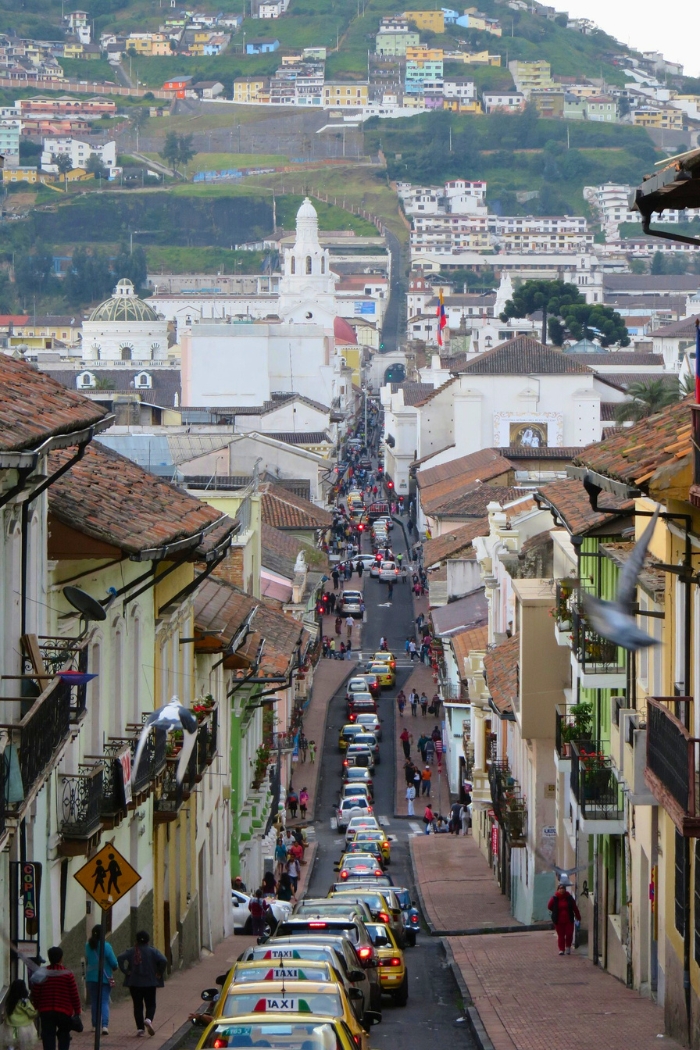
Quito’s historic center is one of the best preserved in the Americas. It was the first UNESCO World Heritage Site city, alongside Kraków. Cobblestone streets lead to colonial churches, monasteries and plazas, including the grand Basílica del Voto Nacional and the ornate Church of the Society of Jesus. The area is home to political landmarks like Carondelet Palace and Plaza de la Independencia aka Plaza Grande as well as eateries and small museums. For sweeping city views, visitors climb the statue of El Panecillo, a winged Virgin Mary that overlooks the capital.
Mitad del Mundo
Located just north of Quito, the Mitad del Mundo monument marks the approximate site of the equator line as measured in the 18th century. Though GPS data now places the true equator 240 meters (790 feet) south, the site remains a popular stop for photos, souvenirs, and science-themed exhibits. The surrounding complex includes craft shops, a planetarium, and a small ethnographic museum inside the monument itself. It’s a fun way to explore Ecuador’s namesake.
El Panecillo
Created by Spanish Artist
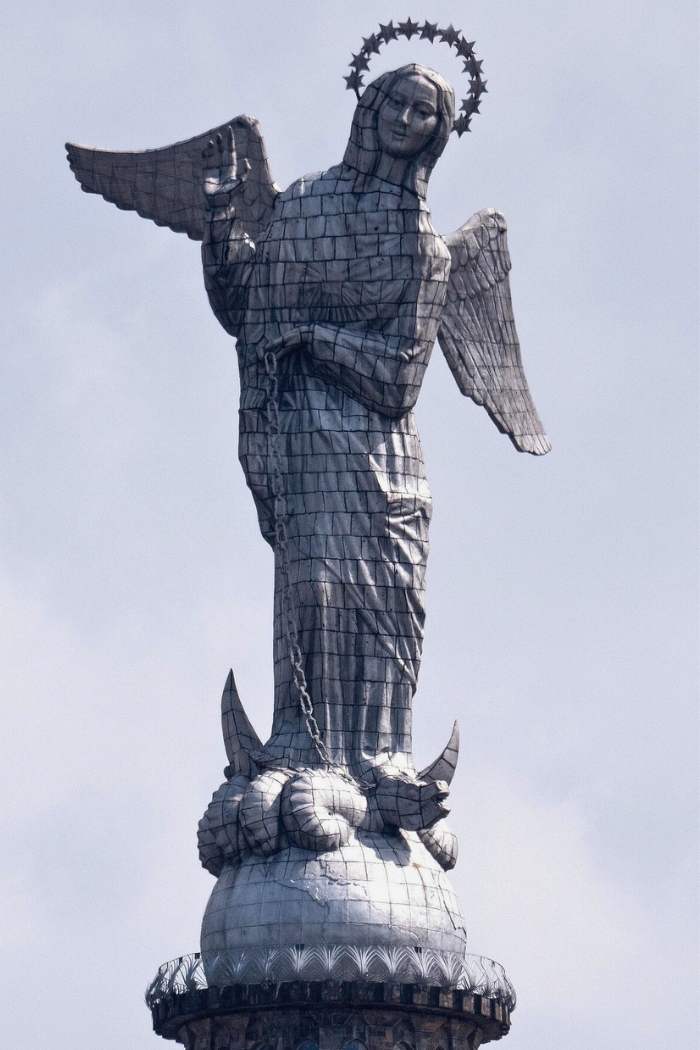
El Panecillo (Spanish, a diminutive of pan, meaning “bread”) is a 200-meter-high volcanic hill located between southern and central Quito. It reaches an elevation of 3,016 meters (9,895 feet). In 1976, Spanish artist Agustín de la Herrán Matorras (Spanish) was commissioned was commissioned by the Missionary Oblates of Mary Immaculate — a Roman Catholic religious order known for their missionary work — to create a 45-meter-tall aluminum statue of the Virgin Mary, which now stands atop the hill high on a pedestal.
Aluminum Statue Was Assembled in Madrid
The statue, made from 7,400 individual pieces of aluminum, was first assembled in Madrid, Spain. Once completed, it was disassembled, shipped to Ecuador, and reassembled on El Panecillo. Known as the Virgin of El Panecillo, the statue was inaugurated on March 28, 1975, though some sources cite the same date in 1976. The winged Virgin stands atop a globe and crushes a serpent beneath her feet, a traditional symbol of triumph over evil.
Basílica del Voto Nacional
A Stunning Cathedral
The Basílica del Voto Nacional is a striking Roman Catholic church situated in Quito’s historic center. Recognized as the largest neo-Gothic Basilica in the Americas, its conception was initiated by Father Julio Matovelle in 1883. President Luis Cordero issued a decree on July 23, 1883, to commence its construction, which was enacted by President José María Plácido Caamaño on March 5, 1884. The French architect Emilio Tarlier, inspired by the Bourges Cathedral, designed the basilica. The first stone was laid on July 10, 1892, and while the main structure was completed by 1924, certain decorative elements remain unfinished. A local legend suggests that completing the basilica would signal the end of the world.
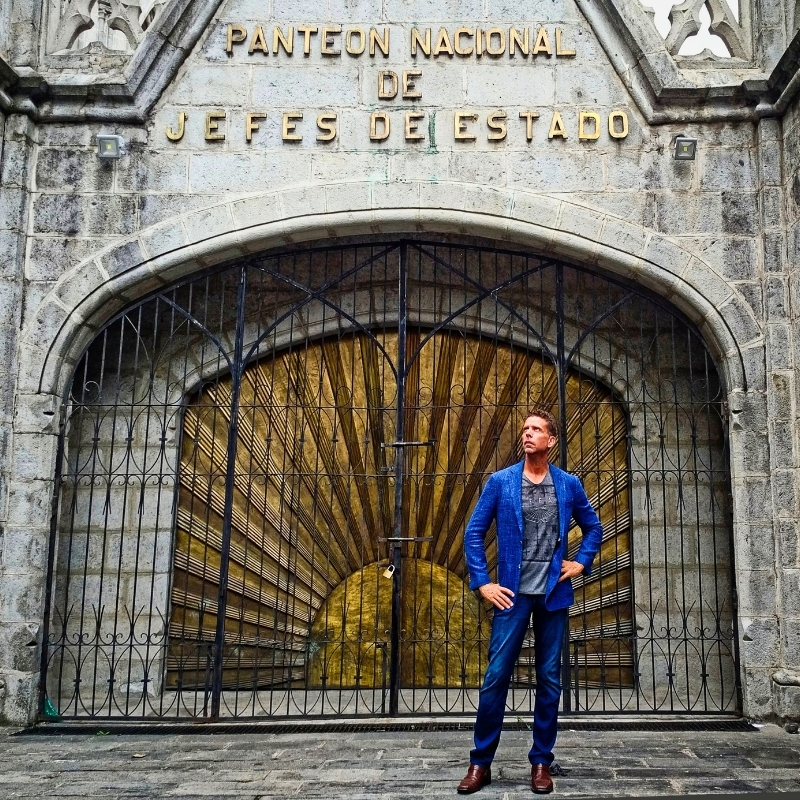
National Pantheon of Heads of State
The western side of the basilica houses a Pantheon of Heads of State, serving as the final resting place for 4 of Ecuador’s former presidents:
- Andrés F. Córdova (1892–1983)
- Antonio Flores Jijón (1833–1915)
- Camilo Ponce Enríquez (1912–1976)
- Mariano Suárez Veintimilla (1897–1980)
Parque Carolina
Parque La Carolina is Quito’s most popular urban park, sprawling over 165 acres in the city’s business and residential core. It’s the go-to spot for basketball, Frisbee, soccer, tennis and volleyball players as well as skateboarders. It has numerous basketball courts, volleyball nets, mini soccer fields, and tennis courts. It also draws cyclists, joggers, and walkers (including those with furry friends). I used to play basketball there all the time while living in Quito. The man-made lake and paddleboards are a hit with families and lovebirds. On weekends, it fills with cultural events and food vendors. One quirky highlight is a graffiti-covered airplane parked on the grounds, a longtime fixture popular with kids and Instagrammers. Located in the modern northern district near Quicentro Shopping (Spanish) and El Jardín Mall (Spanish), it’s easy to access and a favorite escape for locals needing fresh air and green space.
Volcán Pichincha & Cruz Loma
For a day trip into the Andes, take the teleférico (cable car) from Quito’s eastern edge at 3,100 meters (10,170 feet) to Cruz Loma (Spanish), the upper station set at 4,050 meters (13,287 feet). It offers spectacular panoramic views of the city. From there, hiking trails lead to viewpoints with even more breathtaking scenery. On clear days you may see the nearby volcanoes Antisana, Cayambe and Cotopaxi.
Quito — Best Places to Live
The north is considered one of the best areas to live. Neighborhoods like El Condado, El Inca, La Carolina, Las Casas, and La Mariscal are among the most desirable. La Floresta, in the center, is also popular. It’s known for its cafés, shops, and proximity to universities. The south of Quito is made up of lower-middle-class neighborhoods. The valleys, in contrast, are favored by wealthier residents. These suburbs tend to have a slightly warmer climate due to their lower elevation. The best-known neighborhoods in the valleys are Cumbayá and Tumbaco. As mentioned at the beginning of this page, now isn’t the best time to move to Quito because of widespread narco violence. However, in “normal times” Quito is one of the best cities to live in Ecuador for expats.
Cuenca, Azuay
Cuenca, Ideal for:
- Older single person
- Senior citizens
- Social security retirees
Cuenca, Azuay
Cuenca, officially Santa Ana de los Ríos de Cuenca, is the capital of Azuay Province in south-central Ecuador. Located in the Andean highlands at an elevation of 2,560 meters (8,399 feet), the city is known for its well-preserved colonial architecture and longstanding academic institutions. As of 2025, Cuenca’s urban population is an estimated 461,100, according to World Population Review, with the wider metropolitan area reaching around 700,000. It remains Ecuador’s third-largest city, following Quito and Guayaquil. Cuenca is crossed by four rivers — the Tomebamba, Yanuncay, Tarqui, and Machángara — which converge to form the Río Cuenca (Spanish).
Cuenca Climate
Cuenca has a temperate climate year-round—Köppen Cfb. Average daytime temperatures are 18°C (64°F), with cooler nights averaging 10°C (50°F). The rainy season is from October to May, characterized by frequent afternoon showers, while the drier months span from June to September. The mild climate makes Cuenca a popular choice for expats and tourists that prefer cooler weather. I can tell you it gets pretty chilly at night.
Cuenca Crime
While Ecuador experienced its worst year ever for homicide rate in 2023, Cuenca’s safety increased. According to the Policía Nacional del Ecuador, the number of homicides in Cuenca decreased from 33 in 2022 to 20 in 2023. Azuay Province, where Cuenca is located, reported a total of 50 homicides in 2023, with half occurring in Camilo Ponce Enríquez, a community near the Guayas border. Overall, crime rates declined in seven out of nine categories. However, motorcycle thefts increased slightly, with 230 incidents reported in 2023 compared to 211 in 2020. Despite the national state of emergency declared in January 2024, Cuenca has avoided the severe violence plaguing coastal provinces like Guayas and Esmeraldas. Theft remains an issue, so take care of your belongings.
Logistics Is Reason for Cuenca Safety
Legalities aside, drug trafficking is a business. Once cocaine is produced, it needs to reach its destination. In Ecuador — as in other countries — narcotics are typically exported by sea. This is why Guayaquil, the country’s most populated port city, is so violent. The same applies to cities along Ecuador’s coast such as Esmeraldas and Manabí. Rival gangs want control of the port, much like how Mexican cartels clash over the port city of Manzanillo in the state of Colima, Mexico’s busiest port. If you look at a map, you’ll see that Cuenca sits inland, southeast of Guayaquil, high in the Andes and far from the coast. Logistically, it makes no sense for drug shipments to pass through Cuenca. This isolation from trafficking routes has spared the city — and much of Azuay Province — from the worst of Ecuador’s gang violence.
Cuenca Transportation
Cuenca Traffic
Cuenca’s traffic can slow during peak hours near El Centro and main avenues like Avenida 12 de Abril and Avenida Solano. While it’s not comparable to congestion in Guayaquil or Quito, the city is exploring traffic reduction measures.
Getting Around
Cuenca’s compact size makes walking and biking popular ways to get around. Public transportation relies mostly on buses, taxis and Cuenca’s Tranvía tram network, with numerous routes connecting neighborhoods to downtown. The ride-on-demand app uber seems to work in Cuenca. I used it in 2021. However, I can’t find any reliable information whether or not DiDi or InDrive operate in Cuenca. Cabify left the Ecuadorian market in 2023.
Cuenca’s Tranvía
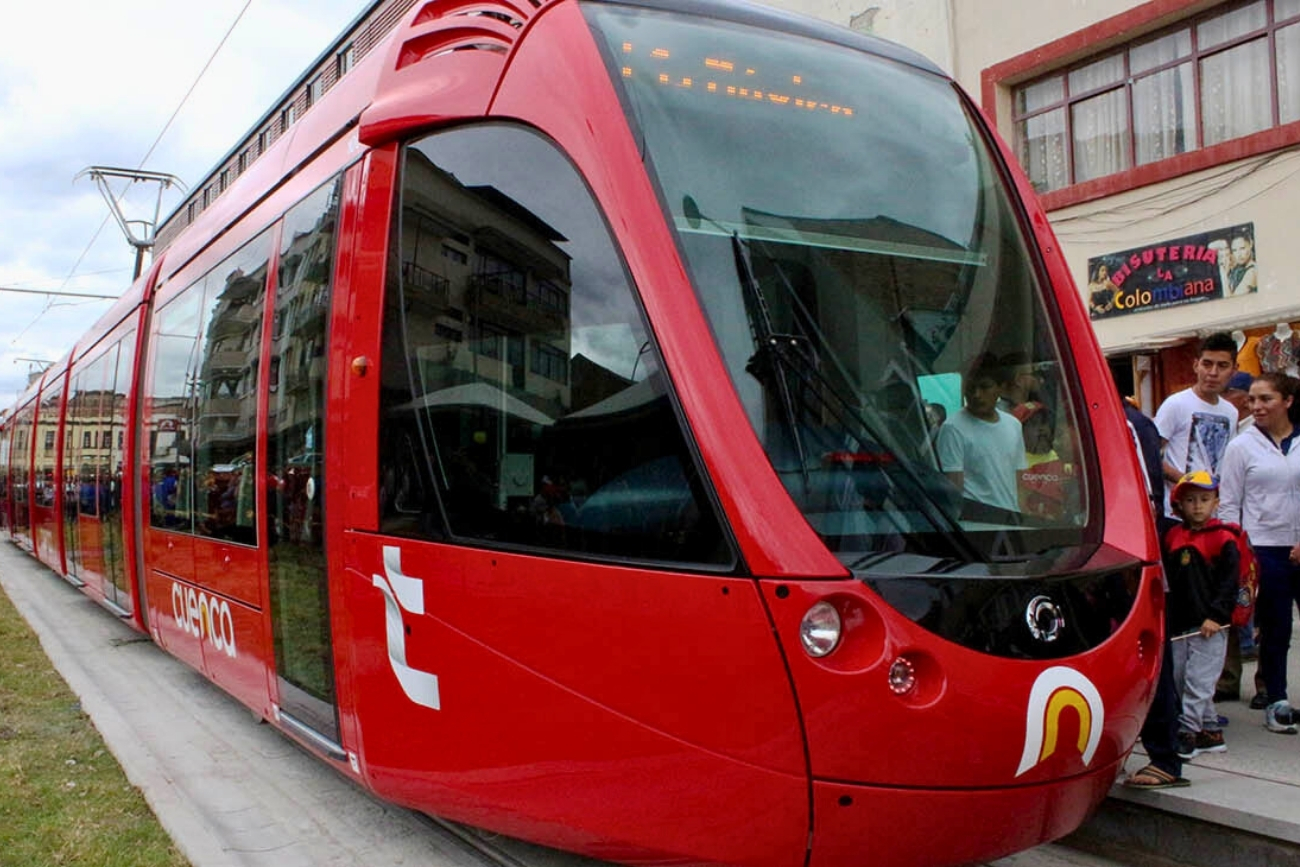
Tranvía Cuatro Ríos is Cuenca’s modern light rail system, known locally as the tranvía. After years of planning and construction delays, it launched service in May 2020. The 11-kilometer (7-mile) line runs from the industrial district of Ricaurte in the northwest to the southern neighborhood of Control Sur, with 27 stations along the way. It cuts through the heart of the city, including El Centro, offering a clean, quiet, and efficient alternative to buses and cars. There are 14 sleek, red trams in operation, with level boarding (no stairs) and dedicated tracks that bypass most traffic. Riding the tranvía is not only practical, but also a fun way to see Cuenca — I mean just look at it, it looks cool!
The tranvía in Cuenca, Azuay, Ecuador is sleek looking.
Courtesy of: Jfbeltranr, CC BY-SA 4.0, via Wikimedia Commons
Cuenca Tourism
El Centro
El Centro is home to the iconic Catedral de la Inmaculada Concepción, situated on one side of Parque Calderón (Spanish). The park itself is clean, with a couple of fountains. It also has a consistent police presence. Numerous restaurants and shops are located nearby. Other parks, such as San Blas and San Sebastián, are within walking distance, as are many colonial buildings and the Agustín Landívar Museum.
Turi Mirador (Lookout)
Turi Mirador, known as “the balcony of Cuenca,” offers a spectacular panoramic view of the city. Located near El Centro, the area includes a few cafés and small shops, as well as the sky-blue and white Iglesia de Turi (Spanish). At the top, visitors can enjoy a park equipped with a zip line, swings, and a balancing slackline.
El Cajas National Park
El Cajas National Park is about 33 kilometers (20.5 miles) west of Cuenca, around a 40-minute drive. This protected area features steep slopes, glacial lakes, and small valleys. The park’s elevation ranges from 3,100 to 4,450 meters (10,170 to 14,600 feet). The average daily temperature is around 5°C (41°F), with daytime highs reaching up to 15°C (59°F) and nighttime lows dropping to -1°C (30°F). Visitors can birdwatch, hike, fish, and camp out in designated areas.
Cuenca — A Trip I’ll Never Forget
Cuenca — Best Places to Live
If you prefer a walkable, historic setting, El Centro has colonial architecture, plazas, and easy access to cafés and markets. Solano Avenue, Challuabamba, and Ordoñez Lasso are other neighborhoods popular with expats and middle-to upper-class locals. Cuenca has modern supermarkets as well as vendors with fresh, local produce. Its temperate mountain climate, cost of living, and safety (especially compared with the rest of Ecuador) draws expats and tourists. Cuenca has been one of the best cities to live in Ecuador for expats for decades.
Guayaquil, Guayas
Guayaquil, Ideal for:
- Older single person
- Young couple
- Young single digital nomad
Guayaquil — Ecuador’s Gateway to the Pacific
Guayaquil — in Guayas Province — was founded on July 25, 1538, by Spanish conquistador Francisco de Orellana. It’s the country’s largest city and main port. Guayaquil sits along the western bank of the Guayas River, just inland from the Pacific Ocean. The city’s strategic coastal location has positioned it as a center for trade and logistics. As of 2025, Guayaquil’s metro area is estimated to have a population of 3.2 million.
Guayaquil Climate
Guayaquil lies at sea level with a tropical savanna climate—Köppen Aw—marked by a hot, humid wet season from January to April and a slightly cooler, drier period the rest of the year. Unlike the highlands, Guayaquil stays warm year-round, with average highs often reaching 31°C (88°F). The city’s low elevation and proximity to the equator mean it rarely sees dramatic swings in temperature.
Guayaquil Crime
It’s Spiraled Out of Control
Guayaquil has become the epicenter of Ecuador’s worsening violence. In early 2025, homicides rose dramatically in this metropolitan area — violent deaths in Guayaquil, Durán, and Samborondón increased from about 244 to 400 in just the first 45 days of the year — a jump of over 60% compared to the same period in 2024. Firefights occur in barrios such as Nueva Prosperina and Socio Vivienda, where dozens have been killed in single incidents.
Guayaquil State of Emergency & Response
In response to the now 3-year crime wave, the Ecuadorian government has taken aggressive measures: declaring states of emergency in Guayaquil’s own Guaya Province along with its second largest capital city Quito and the province of Pichincha. Extra police and military units have been deployed throughout the nation. Authorities have also launched large-scale security operations — thousands of searches, seizing weapons, ammunition, illicit substances, recovering stolen vehicles, and arresting dozens of suspects, including minors.
Turf Wars — Los Tiguerones, Los Choneros & Los Lobos
Guayaquil’s streets and prisons are dominated by Los Tiguerones, Los Choneros, and Los Lobos — rival gangs linked to foreign cartels. Their battles spill into neighborhoods like Nueva Prosperina but also ignite inside prisons. In late 2024, a riot at Guayaquil’s Litoral Penitentiary left 17 inmates dead and 15 injured, one of several deadly uprisings tied to shifting gang alliances and leadership vacuums. Guayaquil’s port is a strategic smuggling hub.
International Reaction & Assistance
The violence has drawn global attention. In mid-2025, Spain approved the extradition of “Commander Willy”, leader of Los Tiguerones, for murders and bombings in Guayaquil. The US has labeled major gangs like Los Choneros and Los Lobos as terrorist groups, paving the way for intelligence sharing and joint operations.
Ecuadorians Call for Bukele “Mano Dura”
Ecuadorian officials and citizens have openly praised El Salvador’s President Nayib Bukele and his successful nationwide offensive against gangs — combining mass arrests, emergency powers, and strict prison control — as an example they hope to emulate. El Salvador dropped its homicide rate to 1.9 per 100,000 in 2024, making it the safest country in the Western Hemisphere.
Guayaquil Transportation
Guayaquil Doesn’t Have Public Train
Guayaquil’s main public transit network consists of the Metrovía — a bus rapid transit (BRT) system with multiple lines connecting key districts, including the city center, Durán, and northern neighborhoods. Traditional city buses also operate widely, though often without fixed schedules. José Joaquín de Olmedo International Airport serves domestic and international flights just minutes from downtown. Ride-on demand-apps DiDi, InDrive, and Uber are available. Cabify left Ecuador in 2023. Taxis are everywhere — but confirm the fare before jumping in.
Regional Buses
Guayaquil’s main bus hub is the Terminal Terrestre de Guayaquil, adjacent to José Joaquín de Olmedo International Airport. Frequent service runs to Cuenca, Quito, and coastal cities. I couldn’t find professional websites to book tickets or to check schedules. Tickets are usually purchased in person at the terminal or arranged through their Facebook pages:
- Ejecutivo San Luis (Facebook page was down when I tried)
Guayaquil — Places of Interest
You’d Be Surprised
Guayaquil has never been known as a tourist destination. However, many tourists pass through Guayaquil on their way to other cities in the Ecuador such as the famous Galapagos Islands, the colonial city of Cuenca and some beaches near Guayaquil — mainly Salinas, Playas and Montañita. Although Guayaquil isn’t a tourist hot spot, it has several interesting places to visit. I’ve been to them all.
Las Peñas and Puerto Santa Ana
Climb up the 444 steps at Las Peñas, which is sits on Cerro Santa Ana (Santa Ana Hill). At the top of the 444 steps lies a sky blue and white lighthouse “El Faro” that was built in 2001. I climbed it and was really sweaty by the time I got to the top! The colors of the lighthouse represent the colors of Guayaquil’s flag. The top of the lighthouse has 360° panoramic views of the city and the Guayas River. Vendors sell drinks, food, and souvenirs. There’s also a small church on the platform to one side of the lighthouse. Puerto Santa Ana (Spanish) is next to Las Peñas. It’s comprised of numerous modern high rises and buildings and a variety of nice restaurants to choose from. You can walk to Malecón 2000 in downtown Guayaquil from Santa Ana.
El Parque Histórico de Guayaquil
The Historical Park of Guayaquil (Spanish) is a cultural and recreational park featuring wildlife, fauna and flora of Guayaquil. It was opened on October 21, 1999. It is comprised of 8 hectares. The park displays beautiful antique homes from old Guayaquil that were dismantled and rebuilt in the park. The land is divided into three zones: Traditions, Urban-Architectural, and Wildlife. The park is located in the area of Samborondón, one of the newer and wealthiest regions of the city. The park is managed by the Public Company of Urban Parks and Public Spaces and the Ministry of Tourism.
History Behind Guayaquil’s First Boutique Hotel
One of the buildings that was taken apart and rebuilt was Hotel del Parque. The building was originally built in 1891 in the center of Guayaquil. It was initially named Hospício Corazón de Jesús, by Guayaquil’s oldest charity. The founder, Julián Coronel Oyarvide (Spanish), stated that it shall provide shelter to the elderly, disabled and homeless regardless of gender. Facing demolition in the 1980’s the Central Bank of Ecuador bought the building and painstakingly moved and rebuilt it in Samborondón. The Oro Verde chain manages the hotel. They claim it to be the first boutique style hotel in Guayaquil.
Malecón 2000
The boardwalk, called Malecón 2000, runs along Puerto Santa Ana. Malecón 2000 features an array of fine restaurants, modern high-rise residences, and the luxurious Wyndham hotel (Spanish). The Malecón 2000 is close to the center of Guayaquil, located on the banks of the Guayas River (Spanish). There are also monuments to see, the most famous being the Morisca Tower — better known as the Public Clock or “Reloj Público”, that can be seen while strolling along the Malecón.
Parque de las Iguanas
Parque de las Iguanas, aka Parque Seminario, Parque Bolívar (Spanish), is located in downtown Guayaquil. It’s a small park with numerous iguanas and pigeons. Inside the park there is a statue of Simón Bolívar mounted on a horse. He was a Venezuelan military General and Politician who led an army that fought to gain independence from Spain for Bolivia, Colombia, Ecuador, Panama, Peru and Venezuela. According to historian Melvin Hoyos, the iguanas arrived in the park in 1970 by a group of young Mormons who could not take them back to their country. Vendors inside the park sell bags of lettuce and seeds for 50 cents. The lettuce is the most popular and is used to feed the iguanas. The seeds are for the pigeons that coexist with the iguanas. One can feed both the iguanas and pigeons right from their hand like I did!
Guayaquil — Best Places to Live
Guayaquil’s security issues are no joke, but some areas remain quite safe. Samborondón, located across the Puente de la Unidad Nacional from the city, is gated, secure and has numerous modern amenities. It’s the number one neighborhood for those that can afford to live there. Urdesa and Puerto Santa Ana (Spanish) with its high rises are a couple others that stand out for their restaurants, walkability, and police presence. Despite the rise in crime, these places offer a secure lifestyle more so than most other parts of Guayaquil. Additionally, although Guayaquil faces security challenges, it’s still one of the best cities to live in Ecuador for expats that like the energy of a major city that located one hour away from nice beaches.
Salinas
Beach Retreat from Guayaquil
Guayaquil doesn’t have a real beach — the water around the city is brown and muddy from the river sediments that flow into the Guayas delta. The most popular beaches that are relatively close to Guayaquil are Salinas, Playas and Montañita. Salinas is located 120 kilometres from Guayaquil, about an hour’s drive away. It’s the most popular beach for Guayaquil residents and tourists alike. The main industries in Salinas are fishing, salt production and tourism.
Galapagos Islands
Whether by air or sea, most traffic to the Galapagos first passes through Guayaquil. Charles Darwin, an Englishman, left his country in 1831 and set sail on the HMS Beagle with Captain Robert Fitzroy on a 5-year voyage. He arrived in the Galapagos Islands in 1835 and developed his Theory of Evolution. He especially studied finches and brought specimens back to England after his voyage to further study his theory. On November 24, 1859, many years later, Charles Darwin published his book “On the Origin of Species.”
Galapagos Islands Gets UNESCO Inscription in 1978
Positioned in the Pacific Ocean approximately 1,000 kilometers away from Ecuador, these 19 islands and the adjacent
marine reserves are often described as an unparalleled living museum and demonstration of evolution. Positioned at the meeting point of three ocean currents, the Galápagos Islands serve as a diverse “melting pot” for marine species.
Ecuador — Notable Towns and Cities
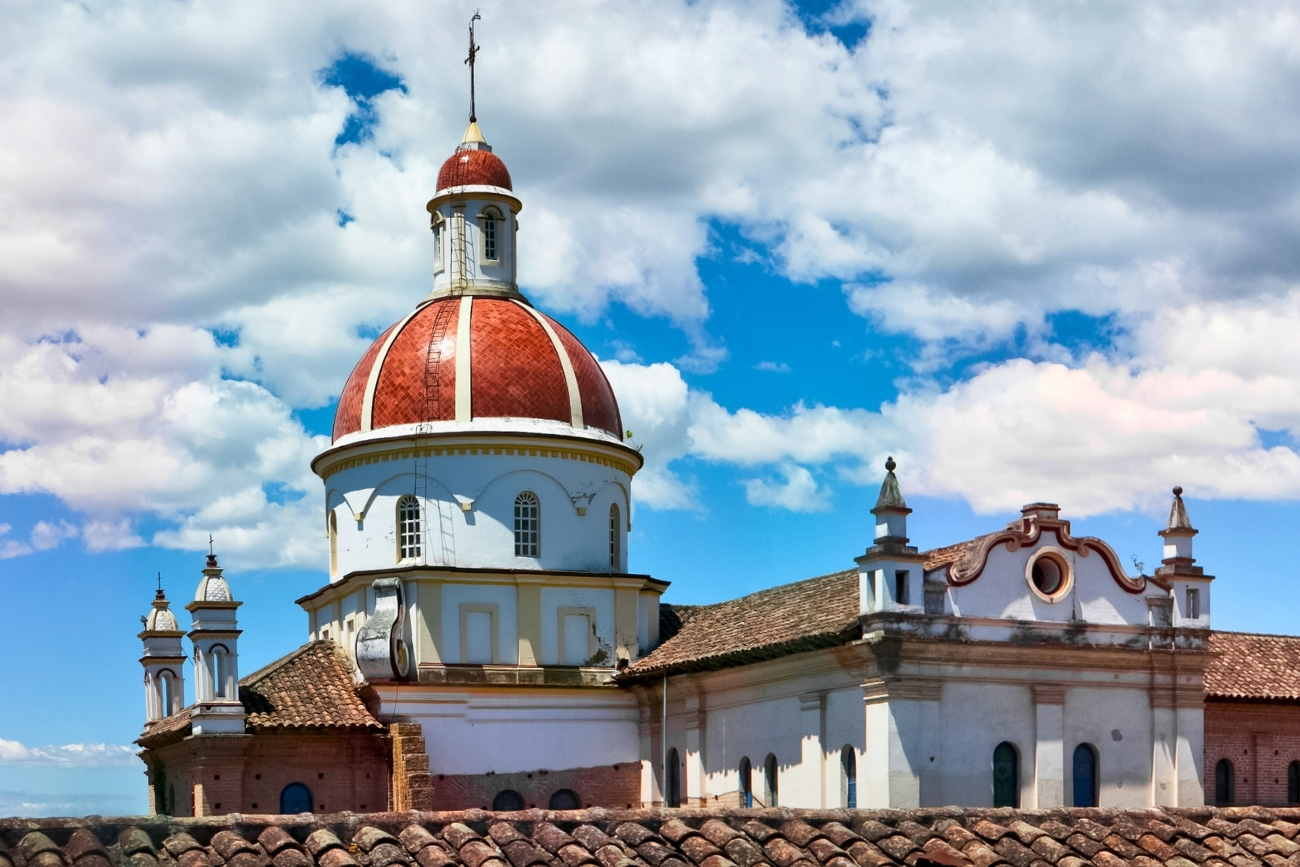
Esmeraldas lies in Ecuador’s northwest coast near the Colombian border. Its inhabitants are primarily of African descent.
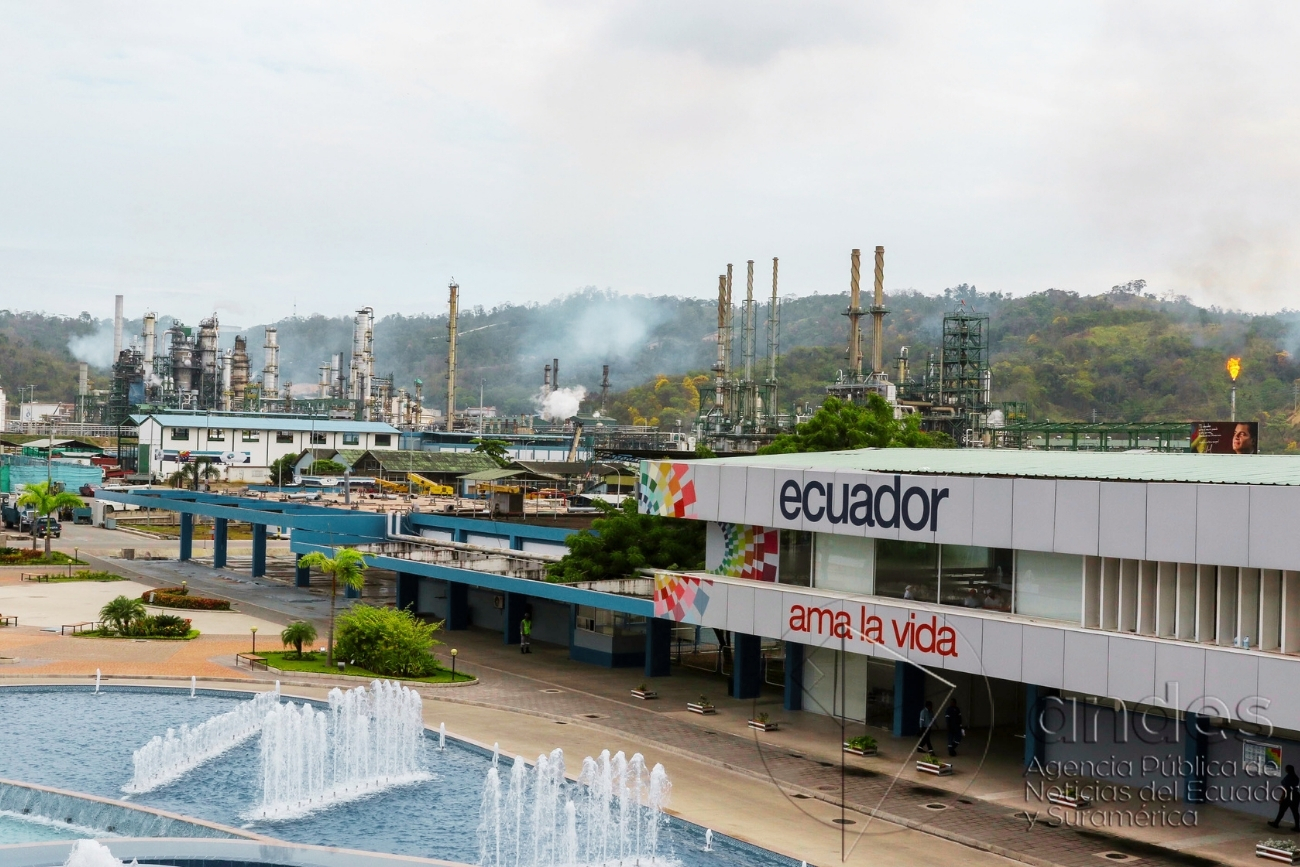
Photo by Agencia de Noticias ANDES, licensed under CC BY-SA 2.0, via Wikimedia Commons.
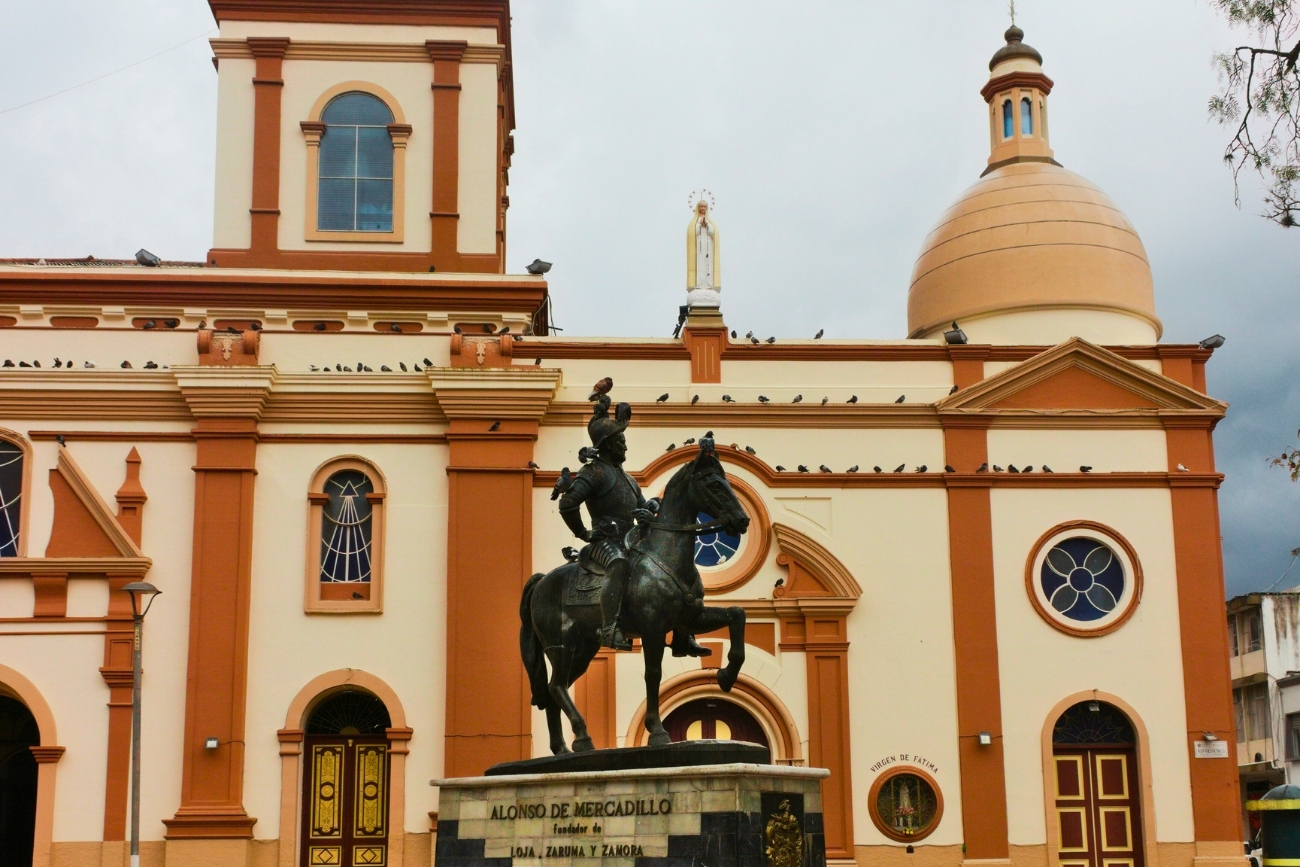
Loja is in central southern Ecuador, is just 185 kilometers from the border town of La Tina, Peru. It is known for its rich tradition in the arts.
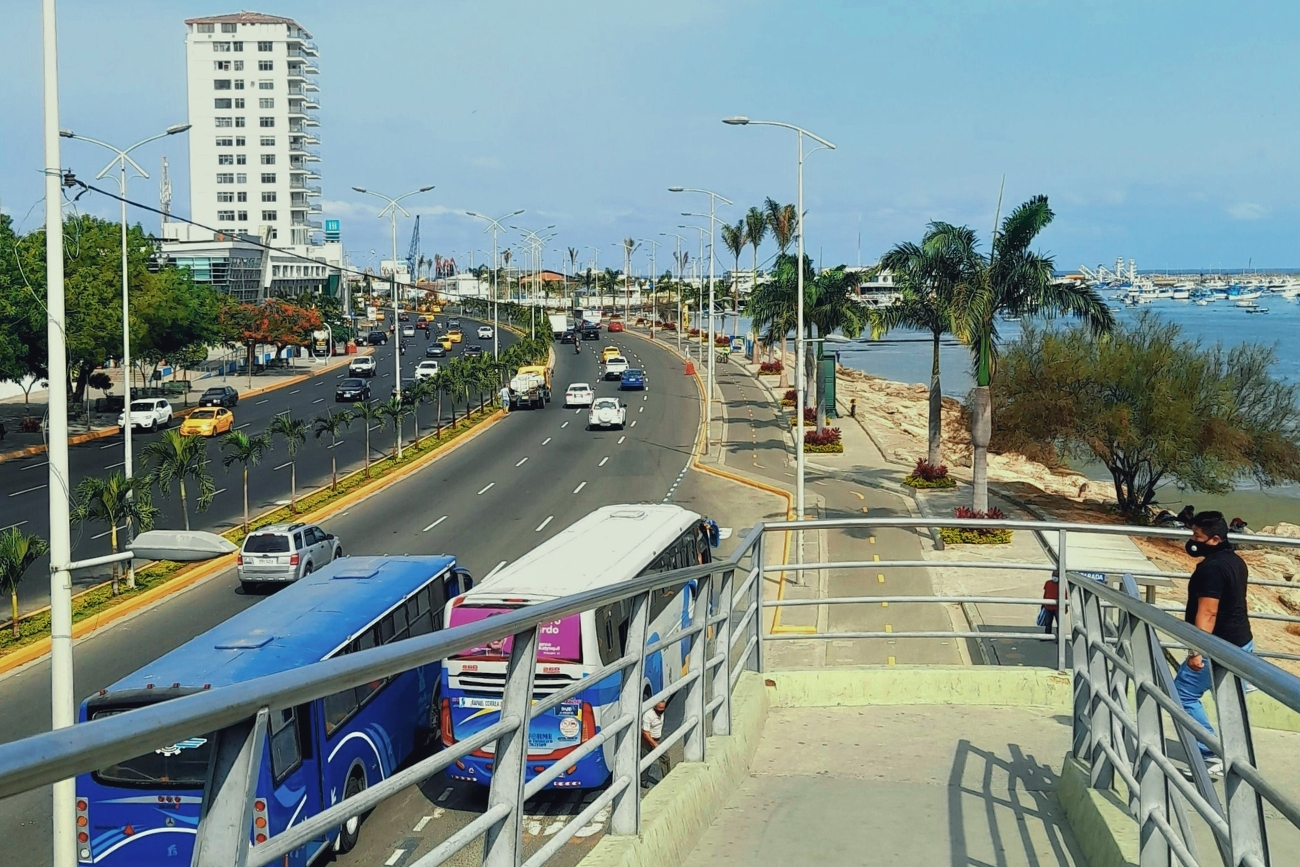
Manta is situated more or less on Ecuador’s central coast. Manta has one of the best economies in Ecuador due to fishing, especially tuna. Its tuna is exported to Europe and the U.S. International tuna corporations including Bumble Bee. The world famous “Panama Hats”, originated in Ecuador and are still made in the nearby town of Montecristi.
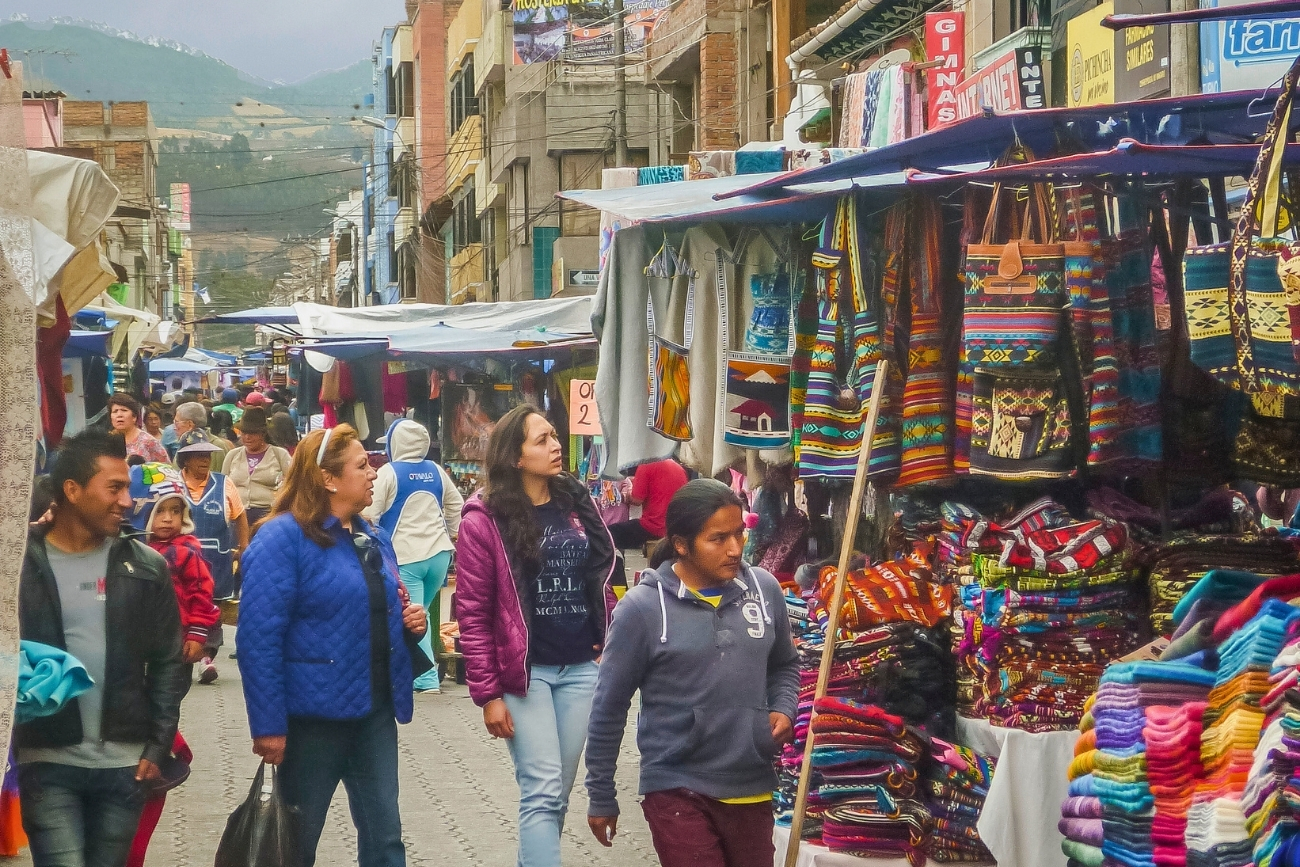
Otavalo is an artisan city in north central Ecuador comprised of roughly 40,000 inhabitants, mostly from the Otavalo indigenous group is known for weaving textiles, usually made of wool. Otavalo is surrounded by the volcanic peaks of Imbabura at 4,630 meters (15,190 feet), and Cotacachi at 4,995 meters (16,388 feet). It’s also close to the town of Cotacachi.
Best Cities to Live in Ecuador for Expats
Conclusion
Hopefully this gave you a better idea of some of the best cities to live in Ecuador for expats. What I love about Ecuador is how diverse it is for such a tiny country. The contrast between regions is striking — and that’s a good thing because it gives you lots of options. Whether you’re drawn to the coast for its chill beach towns, the hot and hectic pace of Guayaquil, the chaotic capital of Quito set high in the mountains, or the serene charm of Cuenca and Otavalo in the highlands, there’s a place in Ecuador that’s sure to feel like home.