
Best Cities to Live in Colombia — 2026
Best Cities to Live in Colombia for Expats TL;DR
I review the best cities to live in Colombia for expats ensuring there is something for everyone. From “lit” beach party scenes for young digital nomads, to serene tranquility in the highlands for seniors. First, we’ll jump into a brief history of Colombia, as I feel it’s important for wanna be expats to know a bit about the country they’re considering calling home. It’s not too long, promise. I then touch on aesthetic surgical and non-surgical procedures as well as medical tourism in Colombia. From there we’ll delve into cities and towns in Colombia that are bound to fit certain expats wants and needs. Feel free to check out our Best Cities to Live in Ecuador and Best Cities to Live in Mexico pages.

Colombia
Considering a move to Colombia? You’re not alone. Its 32 administrative divisions are termed “departamentos,” unlike Ecuador’s “provincias” or Mexico’s “estados.” This compact biodiverse country in South America’s northwest borders Venezuela and Brazil to the east, Peru and Ecuador to the south, and Panama to the northwest. Its varied geography includes the Andes Mountains, Amazon Rainforest, Caribbean and Pacific coasts, and the remote San Andrés and Providencia Archipelago. Colombia blends mestizo, white, indigenous and black cultures. As of mid-2025, its population is estimated at 53.43 million. It ranks third among Spanish-speaking nations, behind Mexico (130 million) and the US (57.4 million), though US numbers include native, heritage, and second-language speakers with varying proficiency.
Brief History of Colombia
In 1499, Alonso de Ojeda, Juan de la Cosa, and Amerigo Vespucci led the first Spanish expedition to reach present-day Colombia’s shores. They encountered a scattered indigenous population, whose diverse languages, customs, religions, and isolated settlements hindered unified resistance against the invaders.
The Spanish Begin Colonizing Colombia
In 1509, Spanish colonization began, establishing settlements in the Urabá and Darién regions, though early attempts faltered due to disease and indigenous resistance. In 1525, Rodrigo de Bastidas founded Santa Marta, Colombia’s oldest still-inhabited city established by Spaniards. On August 6, 1538, Gonzalo Jiménez de Quesada defeated the Chibcha, founding Santa Fe de Bogotá, and named the region Nuevo Reino de Granada. Governed by the Royal Audience of Santa Fe de Bogotá, the New Kingdom relied on Spain’s Council of the Indies for major decisions.
Simón Bolívar and Francisco de Paula Santander Lead Rebellion
Battle of Boyacá
On August 7, 1819, a rebel army led by Simón Bolívar and Francisco de Paula Santander defeated Spanish General José María Barreiro’s royal forces at the Battle of Boyacá. The rebels outmaneuvered Barreiro’s troops at a critical bridge. This secured a decisive victory. The battle marked a turning point. It crushed Spanish resistance and paved the way for Colombia’s independence.
La Gran Colombia is Born
The territory was renamed La Gran Colombia in honor of Christopher Columbus. However, many historians believe he never set foot in present-day Colombia.
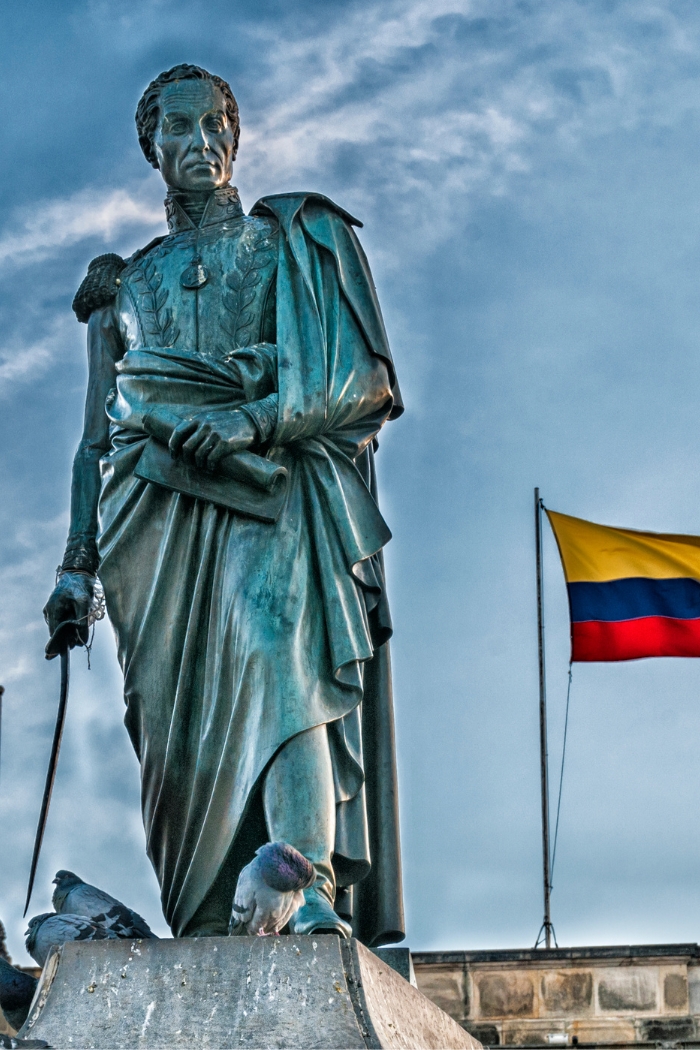
Alonso de Ojeda First to Reach Colombia
Alonso de Ojeda, a Spanish navigator who sailed with Columbus, was likely the first to reach Colombia. Ojeda briefly explored the Sierra Nevada de Santa Marta. The Angostura Congress proclaimed La Gran Colombia on December 17, 1819.
Present Day Colombia, Ecuador, Panama and Venezuela Made Up La Gran Colombia
Colombia — which at that time included Ecuador (which at the time was still partially still under Spanish rule), Panama, and Venezuela formed the new country. La Gran Colombia was led by Francisco de Paula Santander, with its capital in Santa Fe de Bogotá, while Bolívar continued south to liberate Ecuador and Peru of any remaining Spanish Realistas.
La Gran Colombia Disbands After 11 Years
La Gran Colombia dissolved after 11 years partly because the territory was so large and communication between departments (states) was difficult. In addition, the local leaders and oligarchy were dissatisfied with the constitution and the election of Bogotá as the capital. Between November 23 and 25, 1829, in Caracas and Valencia Venezuela, a convention took place to decide what form of government the republic should have. The members of this assembly concluded that the separation of the government from Bogotá was in Venezuela’s best interest thereby ignoring Bolívar’s authority.
Ecuador Follows Venezuela’s Lead
After learning of Venezuela’s separation from Colombia, Quito also decided to separate. On May 13, 1830, an assembly of notables met in Quito to resolve the separation of their region from La Gran Colombia. The Southern District declared its independence from Colombia, forming the nation of Ecuador.
Panama, Backed by US, Separates from La Gran Colombia
The United States interests in the Panama Isthmus including the rights to construct and control the Panama Canal led to an American intervention and military deployment in Panama (then part of Colombia). Colombia had previously rejected an offer from the US to build the canal. José Agustín Arango Remón, a Panamanian politician and lawyer, that supported the separatist movement, collaborated with the United States. The separation of Panama from La Gran Colombia occurred on November 3, 1903, at the end of the Thousand Days War.
Aesthetic Surgeries and Medical Tourism in Colombia

Colombian Women Like Cosmetic Surgery
Colombia has become a prime destination for inexpensive cosmetic surgery. Cosmetic surgery is very common in Colombia and not only for the wealthy. Cosmetic surgeries are performed in major cities of Colombia with Cali having the most clinics.
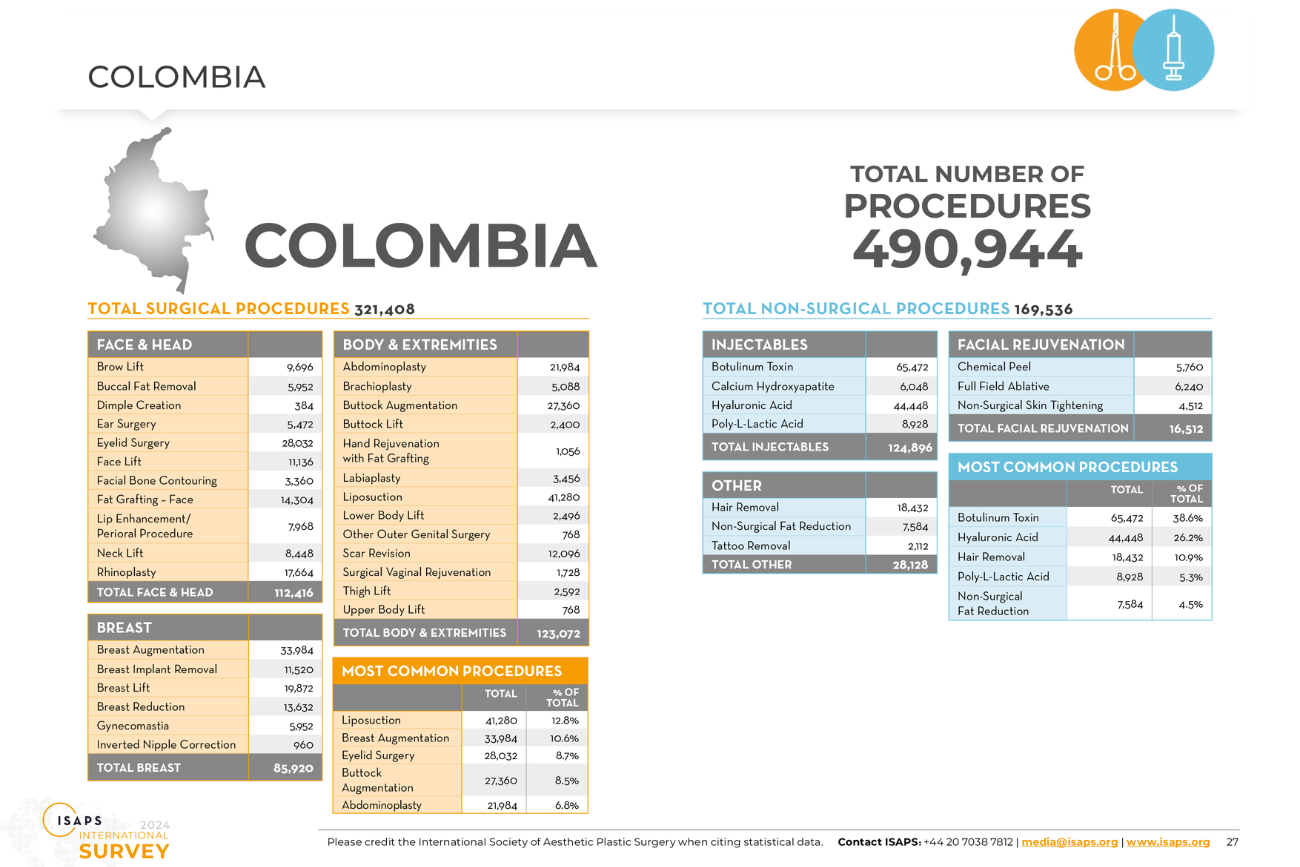
Surgical and Non-Surgical Procedures
According to International Society for Aesthetic Plastic Surgery, in 2024, Colombia had an estimated 1,000 registered surgeons. 490,944 surgical and non-surgical procedures were performed. That number is up 43,676 from 2023 but down from previous years.
ISAPS World Congress 2024, Cartagena, Colombia
Cartagena held the 28th annual ISAPS World Congress from June 11-15, 2024, at Las Americas Hotel and Convention Center. The event was described as “Do not miss the opportunity of experiencing the exchange of knowledge, while networking with colleagues and friends under a tropical atmosphere surrounded by the sea. Cartagena, the most important port of Las Americas during colonial times, is a city full of culture, history and Latin flavors.”
Colombia’s Ethnic Diversity and Biodiversity
Colombians are known for their warmth and personality. The country is ethnically diverse, with mestizos, whites, indigenous and blacks being the main ethnicities. Mestizos make up the majority and are found throughout the entire country. White and indigenous communities are concentrated in the Andean highlands, blacks reside predominantly in coastal regions, and whites and indigenous communities are concentrated in the Andean highlands. Colombia is the second most biodiverse country in the world after Brazil.
Breakdown of Ethnic Diversity in Colombia
Numbers are based on the 2023 Latinobarómetro survey, which offers insights into how Latinos self-identify by ethnicity. You can download the survey on their site.
- Mestizo: 43.6.%
- White: 22.8%
- Indigenous: 8.2%
- Don’t know: 8.0%
- Black: 7.8%
- Didn’t answer: 1.7%
- Asian: 0.4%
Colombia — A Tourist Attraction
In 2024, Colombia broke its tourism record, welcoming 6.7 million international visitors (Spanish), according to the Ministry of Commerce, Industry and Tourism (MinCIT). Thanks to economic growth, Colombia’s reputation has moved beyond its drug-trafficking past, although I admit Netflix’s Narcos drew me to explore Medellín and Cartagena for my birthday in 2017.
Venezuelans Fled to Colombia
Colombia has seen significant immigration, mainly due to the Venezuelan diaspora. Over 2.9 million Venezuelans have settled there since 2014, driven by Venezuela’s economic collapse under President Nicolás Maduro. Proximity to Venezuela fuels this migration. Globally, 7.8 million Venezuelans have fled by 2025, per UNHCR. Many crossed into Colombia illegally before border controls tightened. Others come from the US (14.35%) and Ecuador (10.84%). Some Venezuelans move further south to Ecuador or Peru.
Colombian Food
Traditional Colombian Cuisine
Colombian gastronomy is the result of a fusion of food and traditions of the Indo-American, Spanish and African cultures. Each region has a typical dish with their own ingredients and method of preparation. Some that stand out are the ajiaco santafereño, arepa, bandeja paisa, empanada, lechona tolimense, mamona o ternera a la llanera, mote de queso, mute santanereano, sancocho, tamal, and various types of fish in the coastal areas.
National and International Franchises in Colombia
National food franchises like Crepes & Waffles, Jeno’s Pizza, and El Corral are a hit with Colombians, alongside popular US chains such as, Burger King, Domino’s, KFC, and McDonald’s.
Best Cities to Live in Colombia for Expats
I’ve categorized different types of expats. Most people, not all, fall into one of the categories below. Trust me, I know not everyone fits in a box. At the beginning of a new city section, I’ll include which type of expat would typically fit best. I won’t list these for smaller towns or quick mentions, only the best cities to live in Colombia.
- Older single person
- Rich of any age
- Senior citizens
- Social security retirees
- Young couple
- Young single digital nomad
Colombia Safety Concerns
Colombia has high crime in many cities. It’s important to be aware of your surroundings and take basic safety precautions that I’m sure you’ve read or heard a thousand times. Check out the tabs below concerning safety tips in Colombia that could apply to anywhere.
I know people want to have fun and for those that drink, I get it. Although I quit drinking, I know what it’s like to be young and want to party. I want people to have fun and “live”. Don’t go to bad areas and don’t get too wasted in some sketchy part of the city. Do your own research in advance of where you’ll be going and let your friends and/or family know where you’ll be at all times. On the other hand, don’t let strangers know your whereabouts.
Also, if you drink make sure to have your drink with you at all times. Don’t go to the bathroom and leave your drink at the bar and come back and drink it. Scopolamine is a drug used in Medellín, and other parts of Colombia to knock people out and rob them of their belongings. I’m guessing Colombia isn’t the only country where this happens.
Colombia is ethnically diverse. About 13% of its people are black, 53.2% are mestizo, and 20.1% are white, per 2018 census (DANE “Departamento Administrativo Nacional de Estadística). Your skin tone and city choice affect how well you blend in. Blacks are prominent on the Caribbean coast in cities like Cartagena and Barranquilla. Bogotá and Medellín have mostly lighter-skinned mestizo and white residents. Colombians are used to seeing foreigners. You may go unnoticed until you speak.
Be careful with your cell phone. Of course, you want to have a good time and get some Instagram worthy pics or videos but just be aware of your surroundings. Be extra cautious at night. Use your gut instinct. We have very powerful instincts. We just need to listen to them.
I don’t recommend bringing any excessive jewelry whatsoever to Colombia. Even if it’s fake and “worth nothing”, a thief doesn’t know that and may still attack. Leave the bling at home and remember “No dar papaya“.
Personally, I’d stay away from wearing Crocs or Tevas. Otherwise just wear comfortable shoes while in Colombia.
If you want to do a Narcos tour in Colombia like I did in Medellín, or any tour for that matter, do it during the day with a reputable tour company. Check on Trip Advisor.
Bogotá, DC
Bogotá, Ideal for:
- Older single person
- Young couple
- Young single digital nomad
Bogotá 3rd in Population/Elevation in South America
Bogotá is Colombia’s capital district with a population of 8.04 million in 2025. It sits in the Andes Mountains at 2,625 meters (8,612 feet) above sea level. This makes it the third-highest capital in South America after La Paz, Bolivia, and Quito, Ecuador and fourth globally behind Thimphu, Bhutan. It ranks third in South America by population, following São Paulo and Lima. The city has 20 localities, known as comunas. It serves as Colombia’s hub for administration, arts, culture, economy, industry, politics, sports, and tourism. In 2024 it welcomed 2.8 million visitors.
Bogotá Climate
Bogotá’s climate is moderately cool—Köppen Cfb—with average daytime temperatures around 14°C (57°F). The dry season is from January to the end of February and from July through the end of August. The intense rainy season occurs from March through May and from September through November. Sometimes very strong storms or downpours occur, which may be accompanied by hail.
Bogotá Crime
Bogotá’s violent crime rate has dramatically declined since its peak in the early 1990s. The city recorded 4,352 homicides in 1993, a staggering 81 per 100,000 residents, according to Colombia’s official homicide data. By 2007, that number had dropped to 1,401 homicides at 19 per 100,000. In 2023, Bogotá reported 1,082 homicides, or 14 per 100,000 — the lowest rate since 1978. While street crimes persist, the city’s homicide rate remains well below the national average of 25.7 per 100,000. This progress is attributed to the Comunidad Segura initiative introduced in 1995, which implemented community policing and targeted intervention. In 2024, the Mayor — Carlos Fernando Galán and Police Chief — José Daniel Gualdrón, announced a new strategy called Bogotá Camina Segura (Spanish).
Globalization World Cities Research Network “GaWC”
Globalization and World Cities Research Network “GaWC” categorizes the importance of world cities into the following global scales with economics weighed more heavily than political or cultural factors:
Cities with Sufficiency of Services
Alpha++ Cities
According to GaWC’s interpretation, “In all analyses, London and New York stand out as clearly more integrated than all other cities and constitute their own high level of integration.”
Alpha+ Cities
According to GaWC’s interpretation, “Other highly integrated cities that complement London and New York, largely filling in advanced service needs for Pacific Asia.”
Alpha & Alpha- Cities
According to GaWC’s interpretation, “Very important world cities that link major economic regions and states into the world economy.”
- Alpha++
- Alpha+
- Alpha
- Alpha-
Beta Level Cities
According to GaWC’s interpretation, “These are important world cities that are instrumental in linking their region or state into the world economy.”
- Beta+
- Beta
- Beta-
Gamma Level Cities
According to GaWC’s interpretation, “These can be world cities linking smaller regions or states into the world economy, or important world cities whose major global capacity is not in advanced producer services.”
- Gamma+
- Gamma
- Gamma-
Gamma Level Cities
According to GaWC’s interpretation, “These are cities that are not world cities as defined here but they have sufficient services so as not to be overtly dependent on world cities. Two specialized categories of city are common at this level of integration: smaller capital cities, and traditional centres of manufacturing regions.”
- High Sufficiency
- Sufficiency
Bogotá Slips to “Beta+” According to GaWC
Bogotá was categorized as Beta+ in GaWC’s 2024 report. Their previous report in 2022, listed Bogotá as Alpha- so it slipped a spot. It was accompanied by the following cities: Athens, Atlanta (GA), Auckland, Bangalore, Barcelona, Bucharest, Budapest, Chengdu, Dallas, Doha, Hamburg, Hangzhou, Ho Chi Minh City, Lima, Miami, Montreal, Prague, Rome, and Tianjin. Only 8 cities were recognized as Alpha + while just 2 were listed as Alpha ++, London, England and New York City, United States. GaWC cited them as “clearly more integrated than all other cities and constitute their own high level of integration.”
Bogotá Traffic
Bogotá’s traffic is notorious. Air pollution poses a serious problem, similar to Medellín. In 1998, Mayor Enrique Peñalosa launched Pico y Placa, sharing the name with Ecuador’s traffic restriction program. It’s also similar to Mexico City’s Hoy No Circula and Ecuador’s and aims to ease congestion and pollution.
Pico y Placa
Pico y Placa limits vehicle access (Spanish) to Bogotá’s urban areas. It restricts cars based on license plate numbers. On odd days, plates ending in 1, 2, 3, 4, 5 can circulate. On even days, plates ending in 6, 7, 8, 9, 0 can circulate. The hours for private vehicles are 6 AM to 9 PM, Monday through Friday. Taxis face restrictions from 5:30 AM to 9 PM, Monday through Saturday.
Live Near What Matters
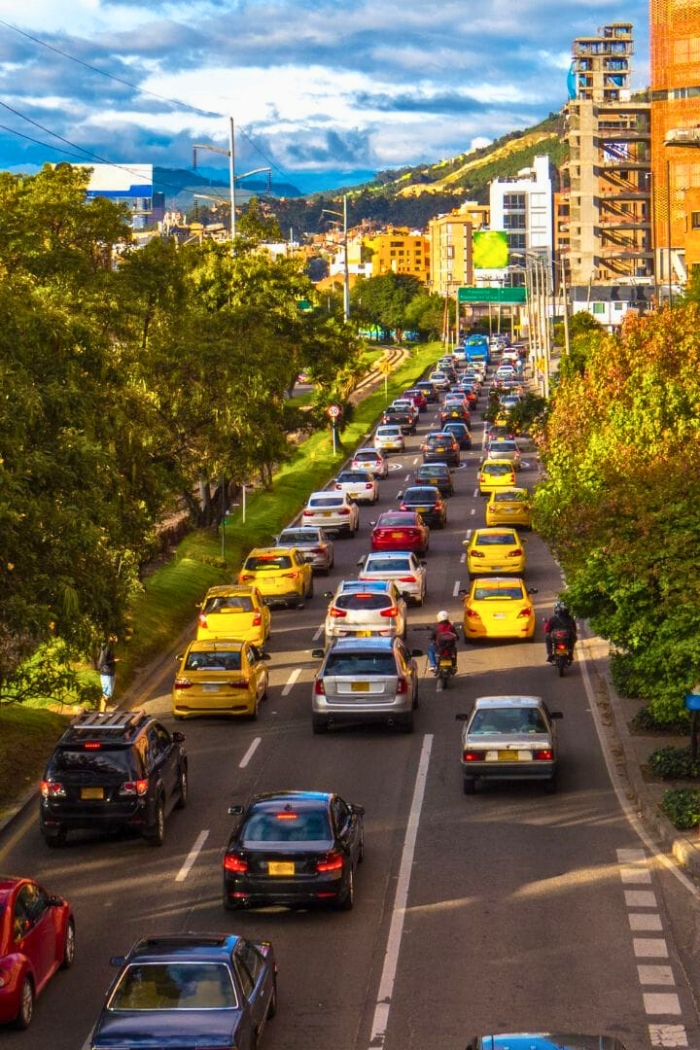
Choose a neighborhood close to key places. Prioritize access to health clubs, hospitals, parks, public transit, schools, supermarkets or workplaces. Being close to what matters just makes life a lot easier — long or time-consuming commutes will wear on you.
Bogotá Transportation
El Dorado International Airport (BOG)
El Dorado International Airport (BOG), aka Aeropuerto Internacional El Dorado, lies 15 kilometers (9.3 miles) west of downtown Bogotá. It was the busiest airport in Latin America in 2024, handling 45.8 million passengers. BOG offers 46 direct international routes across Europe, North America, and Latin America/Caribbean, along with 44 domestic connections. It is served by 30 airlines from 26 countries.
Tu Llave Integrated Mobility Card
Tu Llave is a contactless smart card used across Bogotá’s main bus systems—TransMilenio (Spanish) and SITP feeder buses. Cards can be purchased and recharged at transit stations and at the airport.
Local Buses TransMilenio & SITP
TransMilenio (Spanish), Bogotá’s flagship bus rapid transit (BRT) system, spans 114.4 kilometers (71.1 miles) across 12 lines and has 143 stations, serving 2.01 million riders in 2024. The broader SITP network complements it with urban and feeder buses that reach neighborhoods beyond the main corridors.
Regional Buses
Bogotá’s intercity bus services operate out of three main terminals: Terminal de Transporte de Bogotá (Salitre), located in the city’s west; Terminal Satélite del Norte on the north highway; and Terminal Satélite del Sur on the south freeway. These terminals serve destinations like Barranquilla, Cali, Cartagena, Medellín, Pereira, Popayán, Rionegro, and many towns across Cundinamarca and the wider region. The following major carriers have mobile apps. Tickets can be bought via app, online or at the terminal.
Metro Line 1 Opening in 2028
Bogotá’s first metro line is currently under construction. It will run 23.9 kilometers (14.9 miles) from Bosa to Chapinero and is scheduled to open in 2028, connecting with both TransMilenio and SITP services.
Ride-On-Demand, Taxis and Rentals
Ride-On-Demand apps Cabify, DiDi, InDrive, Uber and Yango are available. Imperial Taxi is the official airport taxi, visible at the stands just outside Terminal 1, and uses a meter, although they have a dismal 2.8 rating in Google Maps. Downtown, taxis aren’t tied to a single company — you can hail any yellow cab or book through the Easy Tappsi aka Easy Taxi app (part of Cabify). If hailing a cab from the street, make sure the meter is working and reset before your trip begins. Cars can be rented at the airport from Alamo, Budget, Enterprise, Localiza (Spanish), National, and Sixt. Some local rental companies with good reviews on Google Maps are:
- ABC Rent a Car — Spanish (4.6, 473 reviews)
- Continental Rent a Car — Spanish (4.9, 310 reviews)
- Rayther Car Rental — Spanish (4.9, 347 reviews)
- Rent a Car Andina — Spanish (4.9, 220 reviews)
- Renta Fácil — Spanish (4.5, 832 reviews)
- Rentocarro — Spanish (4.9, 193 reviews)
Bogotá Tourism
Cerro Monserrate
Cerro Monserrate is an iconic symbol of Bogotá, perched in the eastern mountain range at 3,152 meters. It’s home to the Sanctuary of Señor Caído de Monserrate, surrounded by lush vegetation and offering one of the best panoramic views of the city. You can reach the summit by foot, funicular or cable car. Each route offers stunning views of Bogotá along the way.
La Calendaría
La Candelaria is a neighborhood in the heart of Bogotá, known for its monuments, squares, museums and historic buildings. Its streets are lined with colorful graffiti murals, blending artistic expression with cultural heritage. The neighborhood combines the old and the modern, offering a glimpse into Colombian history and everyday life. Main attractions include Plaza Bolívar, the Botero Museum, the Gabriel García Márquez Cultural Center, the Gold Museum, and the Colón Theater, along with other galleries and landmarks.
Villa de Leyva, Boyacá
Villa de Leyva is a town in the department (state) of Boyacá, located about 165 km from Bogotá. It’s roughly a two-hour drive and makes for an ideal weekend trip. Known for its well-preserved colonial architecture, the town’s main square is one of the largest in Colombia and its most iconic landmark. One point of interest is the Terracotta House (Spanish)— a livable structure made entirely of clay. The Blue Wells is another, with six greenish-blue pools known for their unusual hue. Their distinctive color comes from high concentrations of sulfur, selenium and copper sulfate.
Best Places to Live in Bogotá
Due to heavy traffic, most people in Bogotá prefer to live near their workplace to avoid long commutes. The north, east, and center of the city offer the best housing options, chosen for their proximity to cafes, movie theaters, shopping centers, restaurants, and universities. Neighborhoods such as Candelaria, Cedritos, Chicó, Galerías, and downtown Bogotá are moderately priced. La Cabrera, Rosales, Santa Ana, Seminario, and Usaquén are more exclusive, with a higher price point. Bogotá’s cooler climate and energy of a major capital city are a draw for many, making it on our list as one of the best cities to live in Colombia for expats.
Cali, Valle del Cauca
Cali, Ideal for:
- Older single person
- Young couple
- Young single digital nomad
Cali, Salsa Capital of the World
Santiago de Cali, commonly known as Cali, was founded on July 25, 1536, by Spanish explorer Sebastián de Belalcázar. As the capital of Valle del Cauca Department, it ranks as Colombia’s third-largest city by population. Located in the fertile Cauca Valley, west of the Cauca River and near the Farallones de Cali hills, Cali sits at an elevation of approximately 1,000 meters (3,281 feet). Its tropical savanna climate supports robust agriculture, particularly sugarcane. As of 2025, recent estimates place Cali’s population at 2.5 million.
Cali Climate
Cali has a tropical savanna climate—Köppen Aw—with warm temperatures year-round and clearly defined wet and dry seasons. Average daily temperatures are 24.0°C (73.6°F), with typical highs between 32–34°C (90–93°F) and lows from 18–19°C (64–66°F). Extreme temperatures can reach up to 36°C (96°F) or drop to 13°C (55°F). The dry seasons run from December to February and June to August, while the rainy periods occur from March to May and September to November.
Cali Crime
Cali’s safety improved significantly after 2012, when homicides dropped by 30 cases, violent injuries fell 8%, carjackings decreased 21% (323 fewer incidents), and home break-ins declined 17% (152 fewer cases) compared to 2011. Before 2012, Cali’s security budget was roughly a quarter of Medellín’s and a seventh of Bogotá’s, but investments like 254 surveillance cameras in 2012, growing to over 1,500 by 2024, have bolstered security. Despite an ongoing cocaine trade, homicides have continued to decline. Police operations in 2025 have further improved safety for residents and tourists. Street crime, like theft and robbery, persist across Colombia —like all of Latin America. Stay vigilant and “no dar papaya.”
Cali Transportation
Alfonso Bonilla Aragón International Airport (CLO)
Alfonso Bonilla Aragón International Airport (CLO) lies 18 kilometers (11 miles) southeast of downtown Cali. In 2024, it handled 6.72 million passengers, making it Colombia’s fourth busiest airport. The airport has non-stop international flights to 30 destinations in six countries, plus 20 domestic routes, served by carriers like Avianca, LATAM, JetSmart, Wingo, Spirit, American Airlines and Copa.
Local/Regional Buses and Colectivos
MIO (Masivo Integrado de Occidente) is Cali’s bus rapid transit system with 9 trunk lines, 77 stations, and 243 kilometers of service via main routes, feeders, and express corridors. Buses run daily from 5 AM to 11 PM and are accessed using a contactless MIO card, which can be bought and recharged at station kiosks or select convenience stores. The 3rd party MIO app (by Movilixa) shows route details but can’t be used as a contactless card and doesn’t accept payments. Moovit is another third-party app used in numerous countries for route information.
Besides MIO buses, colectivos—shared passenger vans—run throughout Cali and accept cash only. For regional travel, Cali’s Terminal de Transporte (Calle 30N #2AN-29) serves intercity buses to Bogotá, Medellín, Pereira, Popayán, and beyond. The following major carriers all have apps. Tickets can be bought via app, online, or at the terminal.
Ride-On-Demand, Taxis and Rentals
Ride-on-demand apps Cabify, DiDi, Easy Taxi (a Cabify app), Uber and Yango (crazy 4.9 rating, 2.67 million reviews) operate in Cali. Cali’s yellow taxis don’t use meters, so confirm the fare first. You can also call radio taxi services like Taxi Premium, Taxis Climatizados Cali and TaxExpress Cali. At the airport, cars can be rented from major brands Alamo, Budget, Enterprise, Localiza (Spanish), and National. Some local options with good/excellent reviews include:
- AF Renta a Car — Spanish (4.2, 298 reviews)
- JV Rent a Car — Spanish (4.6, 149 reviews)
- Luigi Rent a Car — Spanish (5.0, 109 reviews)
- Umadi Rent a Car — Spanish (5.0, 854 reviews)
Cali Tourism
San Antonio Neighborhood
San Antonio (Spanish), a historic neighborhood in western Cali bordering El Peñón (Spanish) to the north, is renowned for its preserved colonial architecture. Atop its hill stands the San Antonio Chapel (Spanish), a Baroque-style landmark built in 1747. As Cali’s cultural heart, San Antonio features the Teatro San Antonio, art galleries, public libraries, and craft exhibitions, alongside restaurants serving Colombian cuisine and coffee.
Boulevard del Río
Boulevard del Río, located along the Cali River near the city center, is built over the Túnel de la Avenida Colombia, a 980-meter (3,215-foot) passage that diverts Avenida Colombia to ease traffic. A popular cultural and recreational hub, it attracts locals and tourists with landmarks like the neo-Gothic Iglesia de la Ermita (Spanish), Cali’s most photographed monument, and the iconic El Gato del Río sculpture. Parque de los Poetas and the historic Puente Ortiz (Spanish) are nearby, with various dining options and restricted street vendor access ensuring a safe, tranquil stroll.
Cristo Rey
Cristo Rey, located on Cerro de los Cristales southwest of Cali, is a 26-meter statue sculpted by Carlos Andrés Gómez in 1953. Though smaller than Rio de Janeiro’s 38-meter Christ the Redeemer on Corcovado Mountain, completed in 1931, the statues share a resemblance with Christ’s outstretched arms. A cherished attraction, Cristo Rey draws locals and tourists to its hilltop, with panoramic views of Cali.
Buga
Buga, officially Guadalajara de Buga, lies in the heart of Valle del Cauca, 66 kilometers (41 miles) northeast of Cali. Part of Colombia’s Network of Heritage Towns, Buga’s historic center is highlighted by the Basilica of the Lord of Miracles, one of Colombia’s older basilicas, finished in 1907. A major pilgrimage destination, it draws around 2 million worshippers annually.

Cali, Capital de la Salsa
Cali, dubbed the Capital de la Salsa, hosts the weeklong Festival Mundial de Salsa (Spanish). It features performances by top salsa bands and dance troupes, alongside melómano competitions where enthusiasts vie to uncover rare salsa tracks. In 2024, over 70,000 attendees watched 1,200 dancers compete at Coliseo El Pueblo and Luz de un Nuevo Cielo, with $400 million pesos awarded. The latest edition of the festival took place on September 27, 2025.
Best Places to Live in Cali
Western Cali neighborhoods like Avenida de los Cerros, Los Cristales, and Santa Teresita (Comuna 19, strata 5–6) are sought-after, growing residential areas. Pance and Ciudad Jardín (Comuna 22, strata 5–6), in the south of the city, are the most exclusive areas to live in Cali, with scenic views of nature and modern homes. El Peñón, San Antonio (strata 3–5), and San Cayetano (strata 3–4) in central-west Comuna 15 are more economical yet attractive options, and a top choice for expats and Colombians. With its warm climate, lively cultural scene, and deep-rooted salsa tradition, Cali stands out as one of the best cities to live in Colombia for expats.
Cartagena de Indias, Bolívar
Cartagena, Ideal for:
- Older single person
- Rich of any age
- Social security retirees
- Young couple
- Young single digital nomad
Cartagena, the Walled City
Cartagena de Indias, or simply Cartagena, lies on Colombia’s northern Caribbean coast. It serves as the capital of Bolívar Department. Founded on June 1, 1533, it draws its name from Cartagena, Spain. The city ranks among Colombia’s key ports and a global trade hub. It’s the fifth-largest city in Colombia with 1.04 million residents in 2025.
Cartagena Climate
Cartagena sits at sea level on Colombia’s Caribbean coast, with a tropical climate classified as Köppen Aw. Its tropical heat hits hard with humidity hovering around 80% to 85%. Rain drenches the city from April to June and October to November, though ocean breezes provide some relief. Average daytime temperatures hover around 27.5°C (81.5°F). Hurricanes rarely threaten Cartagena. I found it hot and humid during my visit in October.
Cartagena Crime
Crime in Cartagena has risen recently. Homicides increased from 245 in 2021 to 369 in 2022 — a 51% jump. In the first five months of 2023, the city recorded 144 homicides. Much of the violence is linked to extortion and turf wars among criminal gangs. In an effort to curb violence, authorities have implemented the “Seguridad para Todos” (Security for All) program, focusing on community awareness, policing and increased patrols.
Cartagena Transporation
Rafael Núñez International Airport (CTG)
Rafael Núñez International Airport (CTG) sits about 5 km (3 miles) north of downtown Cartagena. In 2024, it set a record with 7.51 million passengers, making it the third busiest airport in Colombia. It connects directly to 27 destinations in 13 countries and operates 8 nonstop domestic routes.
Local/Regional Buses
TransCaribe (Spanish) is Cartagena’s public bus transit system with five trunk lines and 16 stations along Avenida Pedro de Heredia. Buses run from 6 AM to 11 PM on weekdays and until 9 PM on weekends. A contactless fare card is required and can be bought and reloaded at major stations. TransCaribe doesn’t have a mobile app; however, Moovit, a third-party app, provides real-time route info.
Besides TransCaribe, colectivos — shared passenger vans — run throughout Cartagena and take cash only. For regional travel, the Terminal de Transportes de Cartagena handles buses to cities across Colombia, including Barranquilla, Bogotá, Medellín and Santa Marta. The following major carriers all have mobile apps. Tickets can be bought via app, online or at terminals.
Ride-On-Demand, Taxis and Rentals
Ride-on-demand apps Cabify, InDrive, Uber and Yango operate in Cartagena. These apps are popular for their affordability, ease of use and safety. Yellow taxis don’t use meters, so check the fare before hopping in. Easy Tappsi (a Cabify app aka Easy Taxi) lets you hail a traditional cab, see the estimated fare, and track the ride and pay through the app. Multinational car rental agencies Alamo, Budget, Enterprise, Localiza (Spanish), National, and Sixt operate in Cartagena.
Cartagena Tourism
Cartagena’s Islands
Cartagena locals head to nearby islands for fun in the sun. For many, this island fun is what makes Cartagena the best city to live in Colombia. The islands are a quick getaway from the city. Each one has its own vibe, from laid-back shores to lively boat parties. Here are four favorites:
- Isla Barú: 45 minutes by boat or an hour by car, the islands Playa Blanca has nice white sand. Swimming and grilled fish are popular, but vendors can be a pain.
- Isla Cholón: 45 minutes by boat, Cholón in the Rosario Islands chain is a weekend party spot. Small boats and the occasional yacht blast reggaeton, and seafood feasts abound. Weekdays are much more chill.
- Isla Grande: 1 hour by speedboat, in the Rosario Islands chain. People picnic, snorkel in clear water and walk the mangrove trails. Day passes are available at resorts like IslaBela and Gente de Mar.
- Tierra Bomba: Just a 15-minute boat ride from Bocagrande leads to the island’s beach Punta Arena. Beach clubs and jet skis can be rented. Weekends are jam packed.
Castillo San Felipe de Barajas
A Formidable Fortress
Castillo San Felipe de Barajas stands as a must-visit landmark in Cartagena, Colombia. I loved walking around this stronghold. Despite its name, this is no royal castle but a robust military fortress, widely regarded as the most formidable ever constructed by the Spanish Empire. Perched 12.5 meters (41 feet) above sea level, it dominates the Caribbean coastline, designed to repel invaders with its intricate network of baileys, cannon-mounted turrets, curtain walls, embrasures, and tunnels — don’t worry, I had to look up all the preceding words with the exception of tunnel.
Historical and Structural Significance
Built to protect Cartagena from naval and land-based attacks, the fortress’s strategic design and well-preserved state showcase Spanish military engineering at its peak. Its complex layout, including underground passages and layered defenses, made it nearly impregnable. UNESCO recognized its historical value in 1984 alongside Cartagena’s historic center. The site remains a testament to colonial defense architecture, offering insight into the region’s turbulent past.
Summary of Key Battles
The fortress, crucial for defending Cartagena’s wealth, was a focal point in colonial-era conflicts. In 1697, during the War of the Grand Alliance (aka Nine Years’ War), French privateer Baron de Pointis stormed the smaller fort and looted Cartagena. After major expansions, it withstood the 1741 Battle of Cartagena de Indias (War of Jenkins’ Ear), where Spanish Admiral Blas de Lezo’s 3,000 troops defeated 23,000 British soldiers, inflicting 10,000 losses in a month-long defense. In 1815, during the Spanish American Wars of Independence, Spanish General Pablo Morillo, lead royalist forces to crush colonial rebels in the Siege of Cartagena. They forced Cartagena’s surrender due to depleted resources but didn’t overtake the fortress.
The Walled City of Cartagena
Defensive Walls
The Walled City, or La Ciudad Amurallada, in Cartagena, Colombia, is defined by its robust fortifications, constructed between the 16th and 18th centuries to shield the city from pirate and naval attacks. These stone walls, stretching 11 kilometers with thicknesses up to 2 meters, feature bastions like San Lucas and Santa Catalina, strategically positioned for artillery defense. Built by Spanish engineers, the walls incorporate coral stone from nearby quarries, designed to withstand cannon fire and tropical weathering. Key sections, like the Baluarte de Santo Domingo, allowed sentries to monitor the Caribbean coast, while gates like Puerta del Reloj served as controlled entry points, balancing security and trade.
A Look Inside the Walls
Within La Ciudad Amurallada lies Cartagena’s colonial core, a compact grid of colorful streets and plazas. The area houses historic landmarks such as the Palace of the Inquisition, a former tribunal with baroque architecture, and the San Pedro Claver Church, dedicated to the patron saint of slaves. Narrow cobblestone alleys, lined with bougainvillea-draped balconies, lead to squares like Plaza de Bolívar, where locals and visitors gather. The district is alive with artisan shops, cafes, and markets, blending colonial charm with modern life, all enclosed in “the walls”.
My Trip to Cartagena
Best Places to Live in Cartagena
If you enjoy a modern urban vibe, the northern area of Cartagena is ideal. Bocagrande and Castillogrande, both estratos 5–6, are popular among upper-class Colombians and expats. You’ll find numerous high-rise condos with sleek architecture and stunning views of the Caribbean Sea. The historic downtown offers a different charm, filled with colonial buildings and cobblestone streets. For those who can handle the heat and humidity, Cartagena’s combination of a high-rise Caribbean lifestyle, easy access to nearby islands, and its iconic walled city make it one of the best cities to live in Colombia for expats.
Medellín, Antioquia
Medellín, Ideal for:
- Older single person
- Young couple
- Young single digital nomad
Medellín, Antioquia, Eternal Spring
Medellín lies in the Aburrá Valley of the Andes. It’s the capital of Antioquia departamento (state). Medellín is Colombia’s second-largest city, with a 2025 population of nearly 2.98 million (4.1 million metro area). In 2013, it won “City of the Year” from The Wall Street Journal, Citigroup, and Urban Land Institute, beating Tel Aviv and New York, for urban innovation. Its Comuna 13 escalators and Metrocable eased the commutes of San Javier residents while transforming a once-dangerous neighborhood into a tourist draw, earning it the 2016 Lee Kuan Yew World City Prize.
Medellín Climate
Medellín sits at an elevation of 1,479 meters (4,852 feet). It’s just 695.11 kilometers (431.92 miles) north of the equator. It’s tropical monsoon climate—Köppen Am—maintains a daily average temperature of 22.1°C (72°F) with minimal variation. Medellín is much cooler than lowland cities but not too cold, making it ideal for year-round outdoor activities. The rainy season from March to November creates a verdant landscape. Its nickname, “the city of eternal spring,” is well deserved. The weather was perfect when I visited in October.
Medellín Air Pollution
Air pollution poses a serious challenge in Medellín, as the city sits in the Aburrá Valley, where contaminants linger until strong winds disperse them. Efforts to address this issue include the Pacto por la calidad del aire, signed in 2019 to promote sustainable solutions. One initiative involves introducing electric buses and taxis, with plans to phase out gasoline-powered versions of these vehicles over time.
Medellín Crime
Medellín’s violence has plummeted since the 1990s, with homicides dropping from 381 per 100,000 in 1991 to 13 in 2023, though 2025 reports 144 cases by May, up 9 percent, estimating 10-11 per 100,000. La Candelaria (downtown) faces the highest homicide and theft rates, followed by areas like San Javier in comuna 13. Upscale El Poblado and Laureles (Spanish) are generally safe from physical violence but are prone to theft. The trendy Parque Lleras in El Poblado, a nightlife favorite, is known for theft due to late-night crowds and alcohol consumption, making partygoers easy targets.
“Emparejado” Motorcycle Restrictions
In Colombia, riding “emparejado” — two on a motorcycle — has been banned and subsequently lifted in many cities numerous times. The bans were due to crimes involving the “parillero” — the passenger who steals items, or even shoots victims. Due to their agility, motorbikes allow for quick strikes and easy escapes. The emparejado method was allegedly invented by Medellín’s own narco queen Griselda Blanco, though that’s hard to confirm. She sent sicarios on motorcycles to take out her adversaries.
In Medellín, a 2013 law prohibited male passengers from 8 AM to 10 PM, a measure adopted by nine other municipalities, while Bogotá banned male passengers on bikes over 125 cc in 2018. Medellín has no active ban on male motorcycle passengers in 2025. In 2012, Medellín reported 176 motorcycle murders, 15 percent of all homicides.
Medellín’s 16 Comunas
Medellín’s urban areas are organized into six zones, each subdivided into 16 communes, or comunas. To be clear, every neighborhood in the city falls within one of these comunas, creating a comprehensive layout across the 16 divisions.
Comunas Are Not Slums
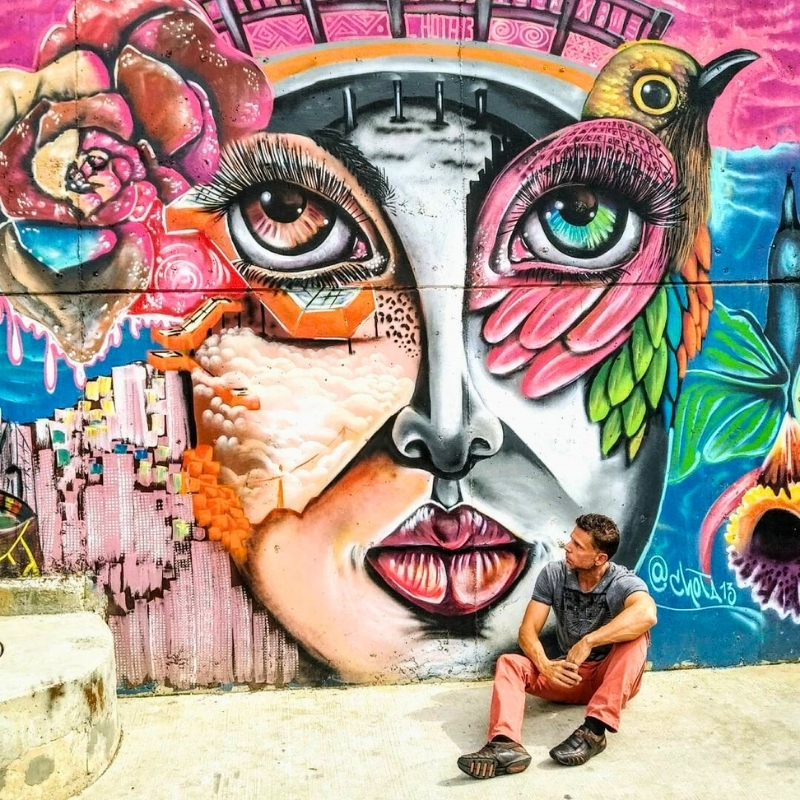
Contrary to misconception, a comuna isn’t a favela or slum. Even Medellín’s wealthiest area, El Poblado, is a comuna, specifically Comuna 14. Another favored upscale neighborhood, Laureles-Estadio, Comuna 11, is a favorite for many for its flat terrain and authentic Colombian feel as compared to hilly, Americanized El Poblado.
Medellín Transportation
José María Córdova International Airport (MDE)
José María Córdova International Airport (MDE) is 20 kilometers (12 miles) southeast of Medellín in Rionegro. It recorded 13.4 million passengers in 2024, making it Colombia’s second-busiest airport. It connects directly to 36 international destinations across 16 countries, and flies 12 nonstop domestic routes.
Tarjeta Cívica
Tarjeta Cívica (Spanish) is Medellín’s reloadable smart card used for the Metro, Metrocable, Metroplús, Tranvía, SITVA buses, and the EnCicla public bike system. It can be bought and reloaded at metro terminals, through the Cívica App, or online. If registered properly the card automatically comes with balance recovery protection if lost.
Metro & Metrocable
The Metro & Metrocable (Spanish) services run throughout Medellín, while intercity buses depart from terminals. The metro system has two lines —A and B— across 27 stations and 34.5 kilometers (21.4 miles), running from 4 AM to 11 PM daily. Medellín’s Metrocable was designed primarily to connect underserved, low-income hillside neighborhoods with the city center, improving access to education, jobs, and services. These cable cars helped reduce travel times and social isolation for residents in steep, previously hard-to-reach areas. At the same time, at least one line—Line J serving La Aurora—has gained popularity with tourists for its views and access to cultural spots. The Metrocable includes six cable‑car lines (H, J, K, L, M, P) spanning 14.6 kilometers (9.1 miles) with 20 stations and 499 cabins, transporting 22.4 million riders in 2024.
Metroplús BRT Buses
Metroplús BRT buses connect with both metro and Metrocable lines via dedicated corridors.
Regional Buses
Medellín’s intercity travel is managed through two main terminals: Terminal del Norte, connected to Caribe metro station, and Terminal del Sur, near El Poblado metro. These terminals serve destinations like Barranquilla, Bogotá, Cali, Cartagena, Pereira, Popayán, Rionegro, and numerous towns in Antioquia. Tickets can be bought via app, online or at terminals. The following major carriers (all websites in Spanish) have mobile apps:
SITVA Public Buses and Colectivos
SITVA city buses (some painted green and marked “Metro”) run on fixed routes and accept the Tarjeta Cívica for payment. Colectivos—shared passenger vans—also run throughout Medellín and take cash only.
Tranvía de Ayacucho
The Tranvía de Ayacucho is a tram that runs 4.2 kilometers (2.6 miles) across Medellín, connecting San Antonio, San José, and Oriente stations. It serves the Ayacucho corridor, linking downtown to eastern neighborhoods like La Candelaria and Buenos Aires via six intermediate stops. The tram runs every 5–6 minutes, and the full ride lasts around 17 minutes.
EnCicla Public Bicycles
EnCicla requires registration and activation with a Tarjeta Cívica, which has a one-time purchase fee. The public bike-sharing system has dozens of docking stations across the Medellín metro area. I searched their site for mention of an app but couldn’t find one — bikes are unlocked using the Tarjeta Cívica. Each ride is limited to one hour, but you can return the bike and check out another immediately after — assuming bikes are available. While it’s technically possible to re-check out the same bike you just returned, the system doesn’t prioritize users or reserve bikes, so another person may grab it first. You’ll need to start a new session each time, and the system may take a few seconds to register a return before allowing a new checkout.
Ride-On-Demand, Taxis, and Rentals
Ride-on-demand apps Cabify, DiDi, InDrive, Uber and Yango operate city-wide. Yellow taxis use meters — make sure it starts before your trip begins. The Easy Tappsi aka Easy Taxi app — part of Cabify — you can request licensed cabs with app-based fare estimates, tracking, and payment. At the airport, cars from multinational agencies Alamo, Enterprise, Localiza (Spanish), National, and Sixt are available. The following local rental companies have good ratings on Google Maps:
- Global Car (4.6, 165 reviews)
- Jet Rent a Car — Spanish (4.7, 332 reviews)
- Rent a Car Medellín — Spanish (4.7, 625 reviews)
- Rentadora Dinámica (4.7, 175 reviews)
- Triple A Solutions — Spanish (4.7, 616 reviews)
Medellín Tourism
Medellín has transformed itself into a tourist attraction despite once being the most feared city on the planet. Medellín currently receives 1.4 million foreigners yearly according to some estimates. That number is expected to rise. While most tourists visit for the vibe and scenery, some seek experiences unique to Medellín. Without passing moral judgment, many are drawn to the wild nightlife and allure of gorgeous Colombian girls. Others explore narco tours, popularized by the Netflix series Narcos (2016), while medical tourists arrive for plastic surgery, for which Colombia is globally renowned.
Medellín Narco Tourism
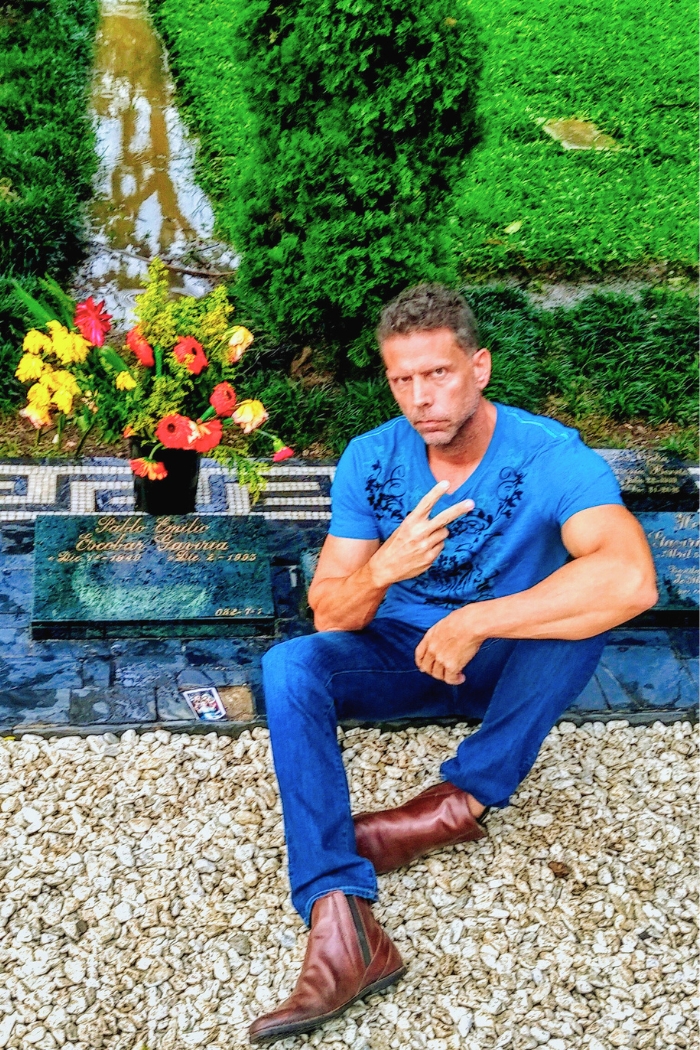
Narco tourism has surged after Netflix released Narcos, luring visitors to explore Medellín’s dark past. Many are fascinated by key sites of the famed Medellín Cartel. These include La Catedral, the prison Pablo Escobar built for himself, the nondescript building where he was shot and killed with the red barrel tiled roof, and Hacienda Nápoles, his former residence turned safari-style theme park. Others visit Escobar’s grave, which lies in the same cemetery, just yards from Griselda Blanco’s, known as La Madrina, the Black Widow, the Cocaine Godmother, and the Queen of Narco Trafficking.
Pablo Escobar’s “Prison” La Catedral
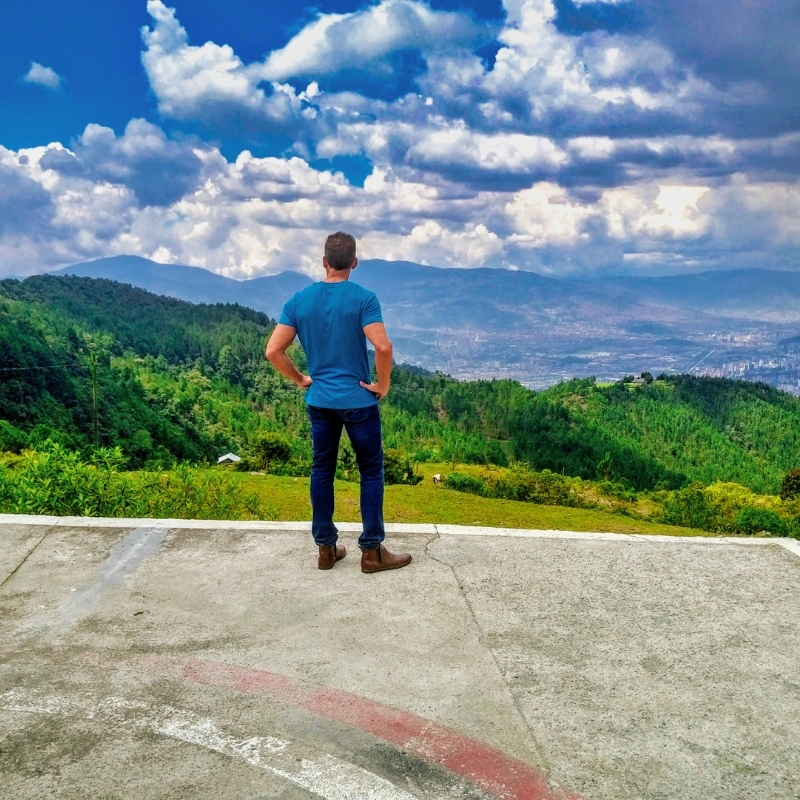
In 1991, the Colombian government allowed Escobar to build his own prison, La Catedral. It sits atop a hill in Envigado, just southeast of Medellín, overlooking the city and features a helipad. Though the facade appeared plain and even ugly, the interior was lavish behind closed doors. Narco tourists now visit this “prison,” transformed into a senior nursing home called Casa de la Memoria. The outer wall displays a painting of Escobar behind bars, with the quote, “Quien no conoce su historia está condenado a repetirla” meaning, “He who does not know his history is condemned to repeat it.”
Avianca Flight Number 203
Straw that Broke the Camel’s Back
Escobar’s failed attempt at killing 1990 presidential candidate, César Augusto Gaviria Trujillo, by blowing up Avianca flight number 203 was the last straw for many.
President-elect César Gaviria Never Boarded the Plane
President-elect Gaviria didn’t board the plane and later became the President of Colombia in the 1990 elections. Drug dealers killing other drug dealers is one thing but blowing up a plane and murdering 110 innocent people is another.
November 27, 1989
On the morning of November 27, 1989, an Avianca jetliner — flight 203 —was en route from Bogotá to Cali, at 7:13 AM. 13 minutes later an explosion killed 110 innocent people, including 101 passengers, 6 crew members, and 3 on the ground. It was the tipping point for many including the United States, as 2 US citizens were among the victims. The Bush administration initiated the Intelligence Support Activity operations to find Escobar.
Hacienda Nápoles
Hacienda Nápoles, Pablo Escobar’s former estate in Puerto Triunfo, Antioquia (Spanish), lies 150 kilometers (93 miles) east of Medellín and 249 kilometers (155 miles) northwest of Bogotá, spanning 20 square kilometers (7.7 square miles). Now a safari-style theme park called Parque Temático Hacienda Nápoles, it features a water park, guided safaris, and a zoo with animals like zebras and hippos, which Escobar imported in the 1980s and have since multiplied. In 2025, it attracts over 500,000 visitors annually, offering a glimpse into Escobar’s notorious legacy alongside family-friendly attractions.
Escobar Just Reaches 44, Dies the Next Day
Pablo Escobar met his end on December 2, 1993, atop a nondescript three-story building with a red barrel-tiled roof in the Los Pinos neighborhood of Medellín’s Laureles area. It was one day after his 44th birthday. Located at Carrera 79B No. 45D-94, it sits on a quiet street flanked by a small canal and lush greenery, with one exit on Carrera 79B and another on a side street, Calle 45D, providing two strategic escape routes. In 2017, last time I visited, one side housed a Spanish school called Colombia Immersion, while the other was a real estate business called M.A. Gestión Inmobiliaria.
By 2025, the Spanish school remains, but the other side is now a small coworking space. The building’s unassuming facade, covered with fake stone panels and potted plants, hides its grim history, enticing tourists to snap photos of the building and roof where Escobar fell.
Parque Memorial Inflexión
Parque Memorial Inflexión, inaugurated in 2019, was designed through an international architecture competition by the firms Pequeña Escala, Taller Alterno, and Ámbito Taller. Covering 5,300 square meters, the memorial transforms the former site of Pablo Escobar’s Monaco building into a sanctuary of harmony and reflection. It’s laid out with a symbolic mix of vegetation, lines, and geometric patterns meant to evoke healing.
The Parks Three “Moments”
The park is organized around three key “moments”:
- Esencia marks the entrance, where nine monoliths along the Camino de los Héroes display quotes from public figures murdered for opposing narcoterrorism.
- Inflexión, the central and most striking element, features a 70-meter-long black stone wall. One side bears 46,612 lit perforations representing lives lost, while the other displays a timeline of 208 violent events tied to the drug war.
- Bosque de la Resiliencia symbolizes recovery and hope. This urban forest includes native trees, and two walls built from the Monaco building’s rubble, transforming destruction into remembrance.
Is Narco Tourism Immoral?
I pondered this after visiting Medellín’s narco sites. Residents of Medellín seem divided on narco tourism’s morality. Many make a living providing narco tours, while others admire Escobar’s Robin Hood-like acts, building churches, homes, and schools, calling him the “Robin Hood Paisa”. Yet just as many condemn glorifying a drug tyrant who killed 4,000-5,000 and ruined countless lives.
Best Places to Live in Medellín
Over the past decade, Medellín has become a top destination for digital nomads, expats, tourists, and Colombians alike. Many consider it the best city to live in Colombia. The city offers a high quality of life with excellent clinics, hospitals, gyms, and modern public transportation. Shopping centers are stylish and well-equipped, and internet speeds are fast, making it an easy place to live and work. Some of the best areas to live in Medellín include Belén, El Poblado, Envigado, Laureles, Provenza, and Sabaneta. Due to what I consider a perfect climate, vastly improved security, and an overall modern lifestyle — Medellín has become one of the best cities to live in Colombia for expats.
El Poblado or Laureles?
El Poblado
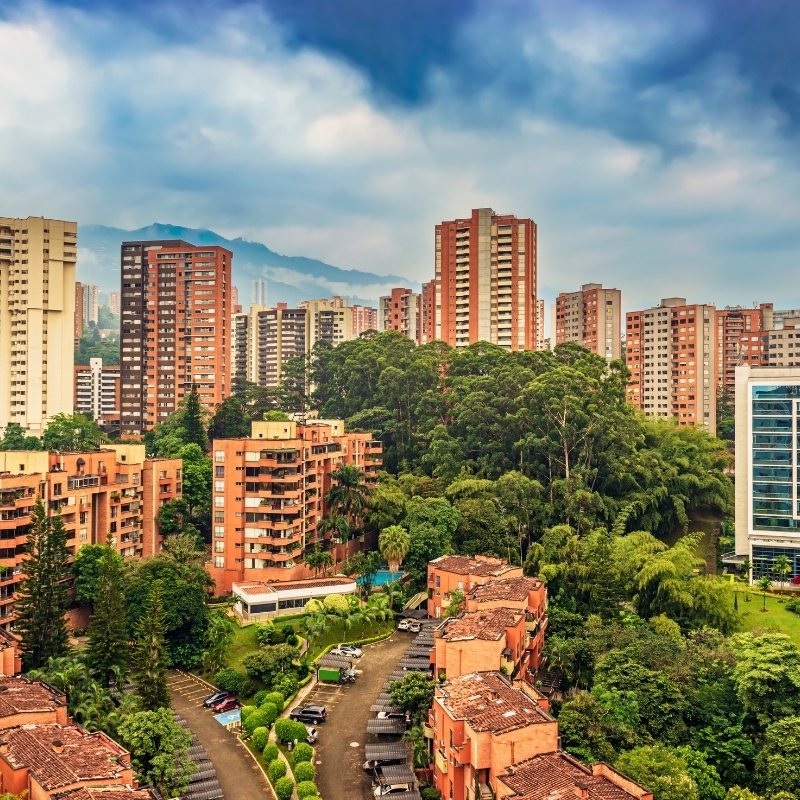
El Poblado is the wealthiest area of Medellín and a favorite among tourists and affluent Colombians. It’s known for its upscale restaurants, nightlife, and shopping. One downside, however, is the terrain. It’s quite hilly, which can make walking difficult and driving challenging — especially with a manual transmission.
Laureles
Laureles, by contrast, isn’t as upscale as El Poblado, but it’s a flat, walkable neighborhood with a relaxed vibe. Many people familiar with Medellín prefer Laureles for its more authentic Colombian feel, as opposed to the more Americanized atmosphere of El Poblado. It’s widely considered the best place to live in Medellín along with El Poblado.
Guatapé, Antioquia
When visiting Medellín, make sure to visit Guatapé. It’s a municipality located 75 kilometers (46.6 miles) from Medellin in the western part of Antioquia. Guatapé’s cobblestone streets are adorned with multi-colored houses. Two story structures abound with wooden balconies. It’s home to the famous El Peñón de Guatapé, one of the ten largest monoliths in the world.
El Peñón de Guatapé aka El Peñol
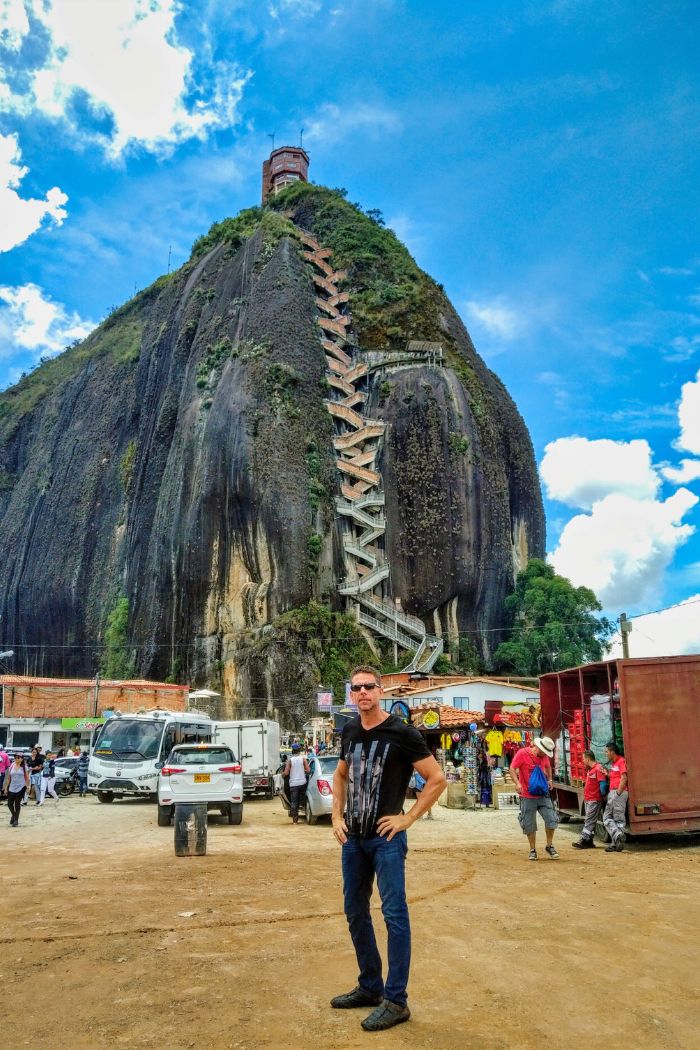
Climbing El Peñol is No Joke
A Towering Monolith
One of Antioquia’s most popular tourist attractions is El Peñón de Guatapé aka La Piedra del Peñol. This towering monolith rises 220 meters (722 feet) above the landscape and sits between the towns of Guatapé and El Peñol. To reach the top, visitors climb 702 steps. You can up a bit further by climbing a small tower staircase where you’ll find a few vendors inside. It’s a natural wonder with scenic views of the 2,000-hectare reservoir below, dotted with green islands.
Guatapé is Special
Other Notable Colombian Cities
Below are some cities worth mentioning. I hope to visit Eje Cafetero briefly and maybe enjoy a longer stay in Bucaramanga. I think I’d like it since it has lots of parks and the type of weather I like. Bucaramanga just may be the best city to live in Colombia — we’ll see.
Located on the western shore of the Magdalena River near its mouth on the Caribbean Sea, Barranquilla is Colombia’s fourth most populous city in the department of Atlántico It has a metro population of 2.4 million as of 2025. It serves as the main economic center of the country’s Caribbean region, with significant industries in footwear and fishing. Barranquilla receives the most tourists during Carnival, held between February and March each year. This celebration, one of the largest and oldest in Latin America, features parades, traditional dances, live music, and colorful costumes.
- In 2008, UNESCO inscribed the Carnival of Barranquilla as a Masterpiece of the Oral and Intangible Heritage of Humanity — it was originally proclaimed in 2003.
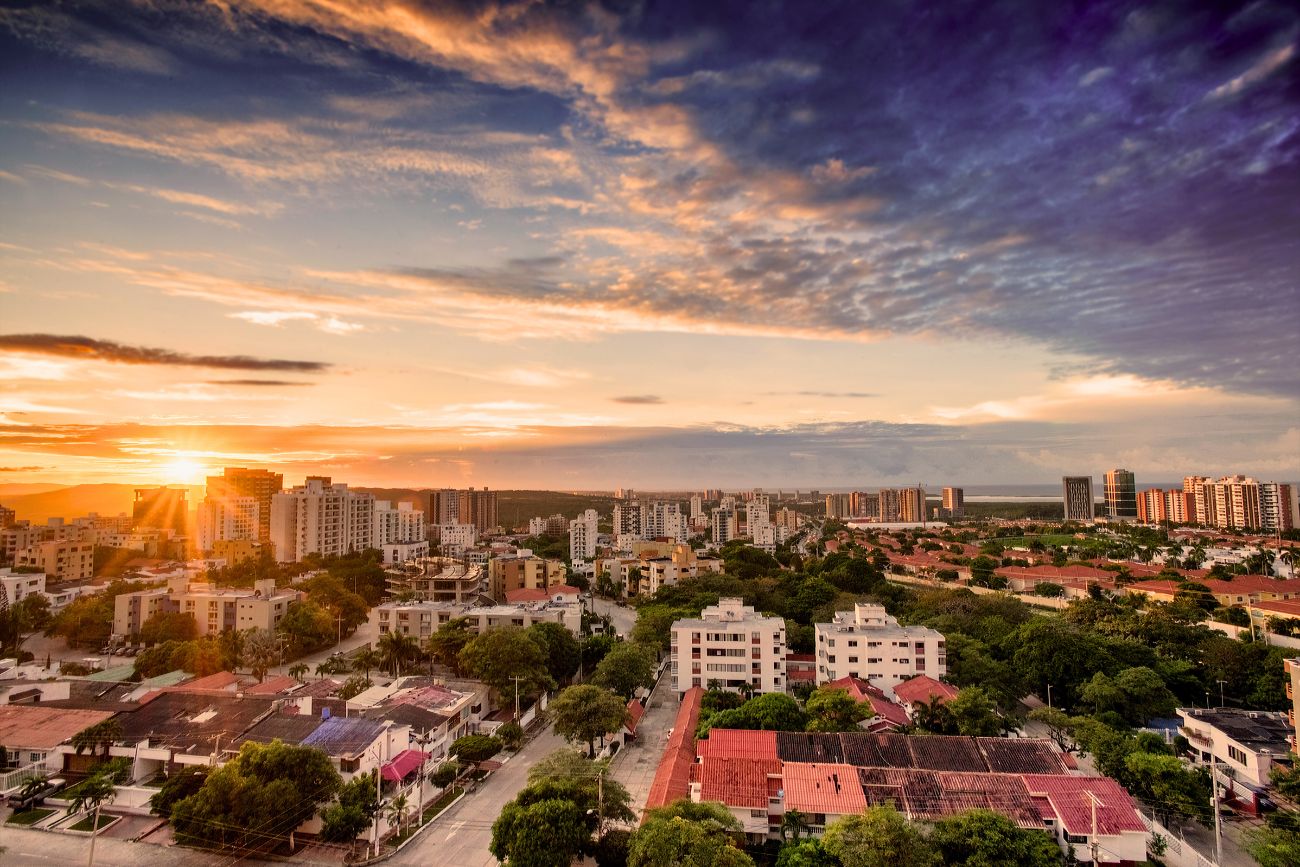
Located in the northeastern Andes, the department of Santander is home to Bucaramanga, a major city in Colombia with a metro population of about 1.3 million as of 2025. Known as the “City of Parks,” Bucaramanga has a relaxed atmosphere, mountain views, and a mild climate year-round. It serves as an important commercial and service hub for the region. Just outside the city lies the scenic Chicamocha Canyon, one of Colombia’s most impressive natural landmarks. I think Bucaramanga is easily one of the best cities to live in Colombia — but I’m a fan of this type of climate.
- Locals are known for snacking on hormigas culonas — literally “big-ass ants” — a traditional roasted treat that’s been part of Santander culture for centuries.
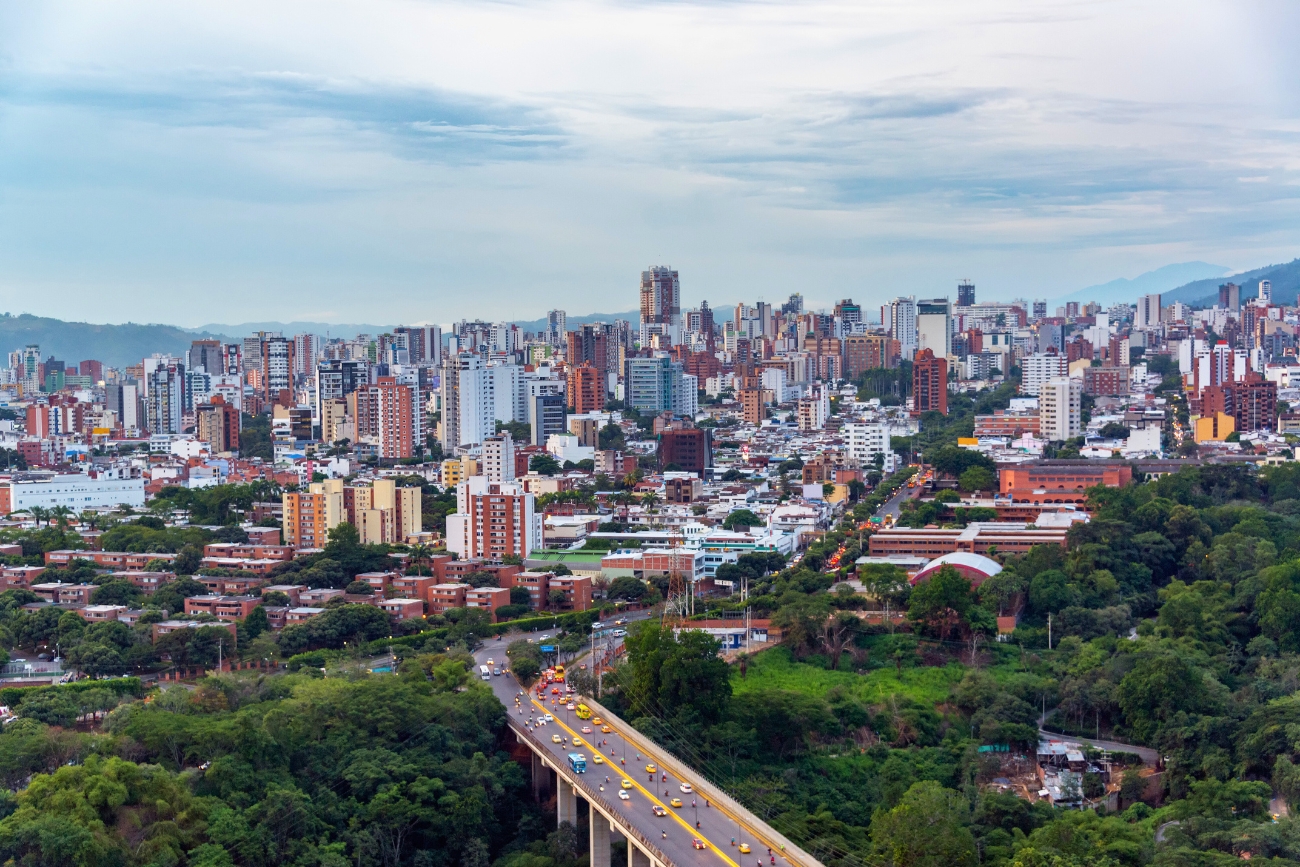
Cúcuta is the capital of the department of Norte de Santander, located in northeastern Colombia near the border with Venezuela, just 12 kilometers from San Antonio del Táchira. It’s the sixth most populated city in the country and an important commercial center for cross-border trade. While Cúcuta gained attention for its role in the Venezuelan migration crisis, the city also has a rich history. I wouldn’t consider it to be one of the best cities to live in Colombia but it’s worth mentioning.
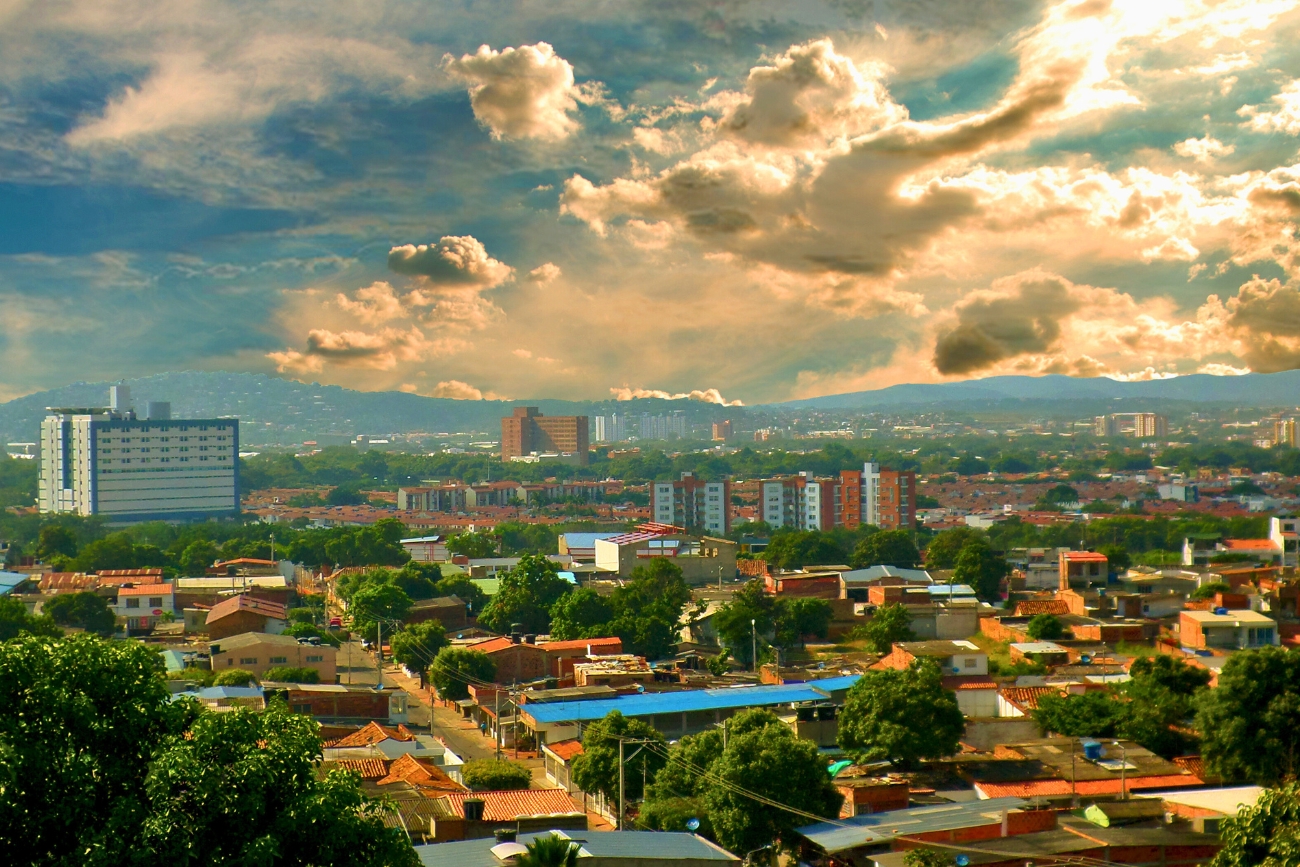
Eje Cafetero (Coffee Axis) includes cities such as Armenia, Ibagué, Manizales and Pereira, located in the Central and Western Andes Mountains. The Colombian Coffee Axis has a great climate, beautiful landscapes and is one of the most visited areas of Colombia. For those seeking serenity in a cooler climate, el Eje Cafetero is one of the best regions to live in Colombia for expats.
- In 2011, the Eje Cafetero region was designated a World Heritage Site for The Coffee Cultural Landscape. It covers the departments (states) of Caldas, Quindío, Risaralda, and parts of Tolima and Valle del Cauca, encompassing cities like Manizales, Armenia, and Pereira.
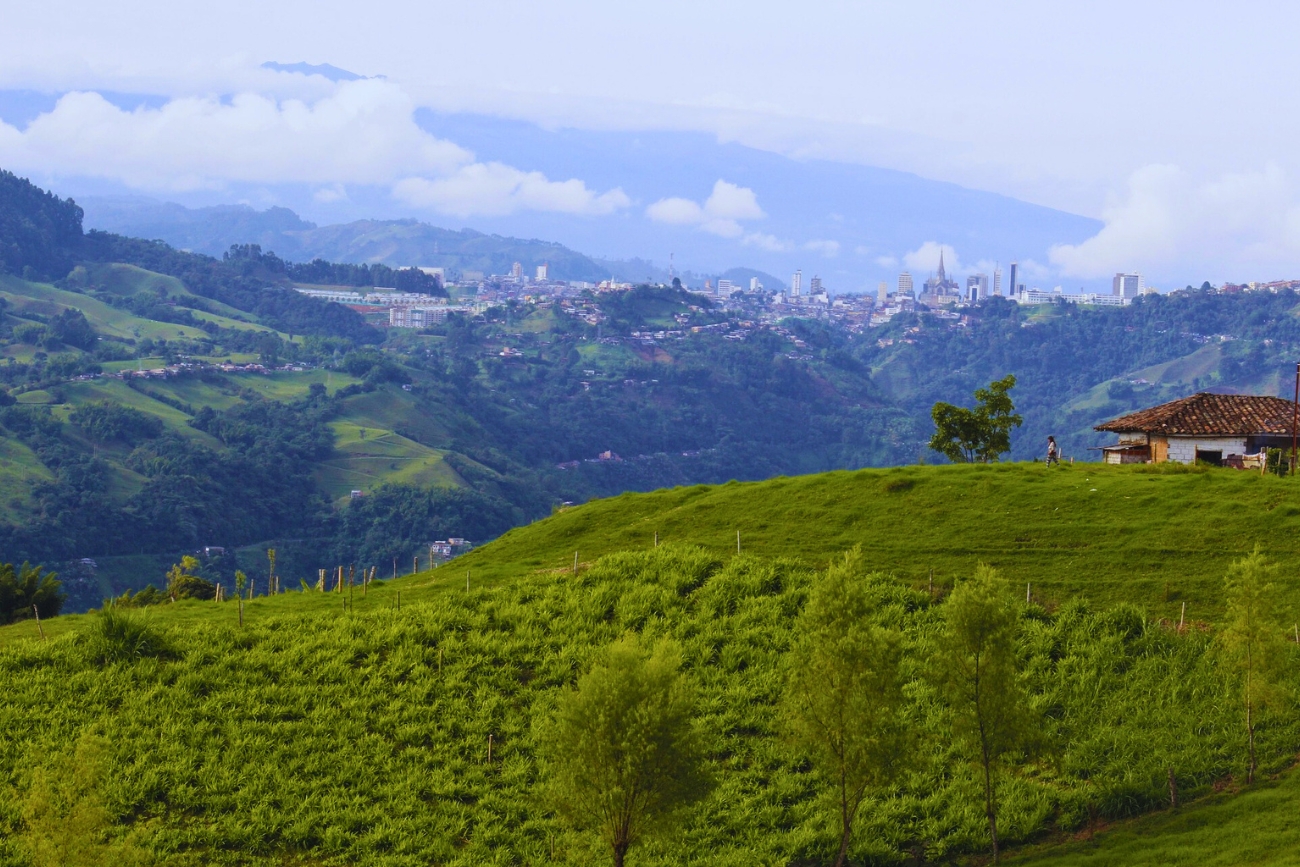
Best Cities to Live in Colombia for Expats
Conclusion
Hopefully you’ve gained some insight on some of the best cities to live in Colombia for expats. I believe there are cities in Colombia to suit everyone regardless of age or socioeconomic status. Some cities are almost polar opposites when compared to one another. That’s a good thing because it gives people options. From young coastal beach vibes with a rockin’ nightlife to the tranquil serenity in the highlands, there’s something for everyone.